Fungus (10萬種)- the fifth kingdom

Mycology-general, medical

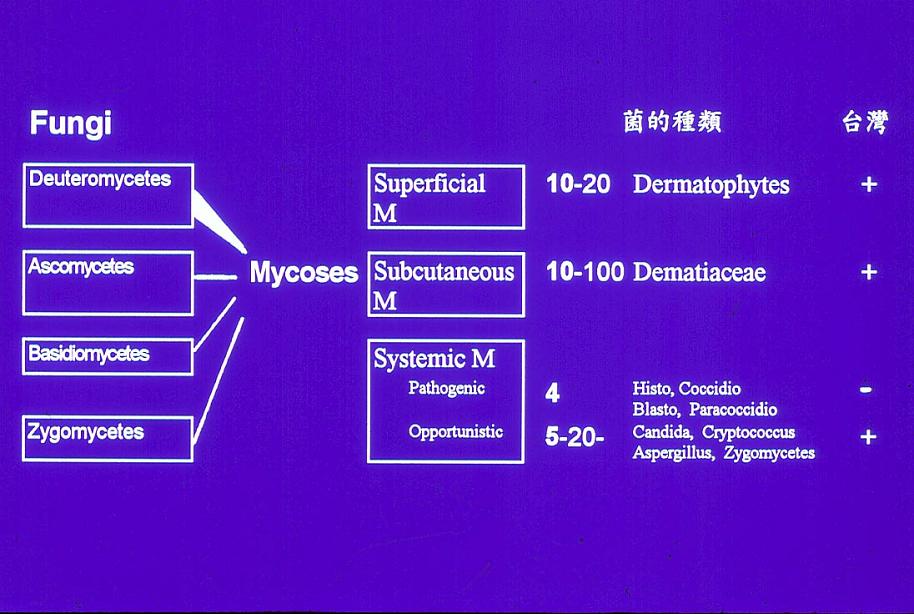
Mycoses (150)

Fungal cells (true fungi)

1. eukaryote, achlorophyllous, aerobic (vs. bacteria)

2. rigid cell wall containing chitin and glucan (vs. cellulose)

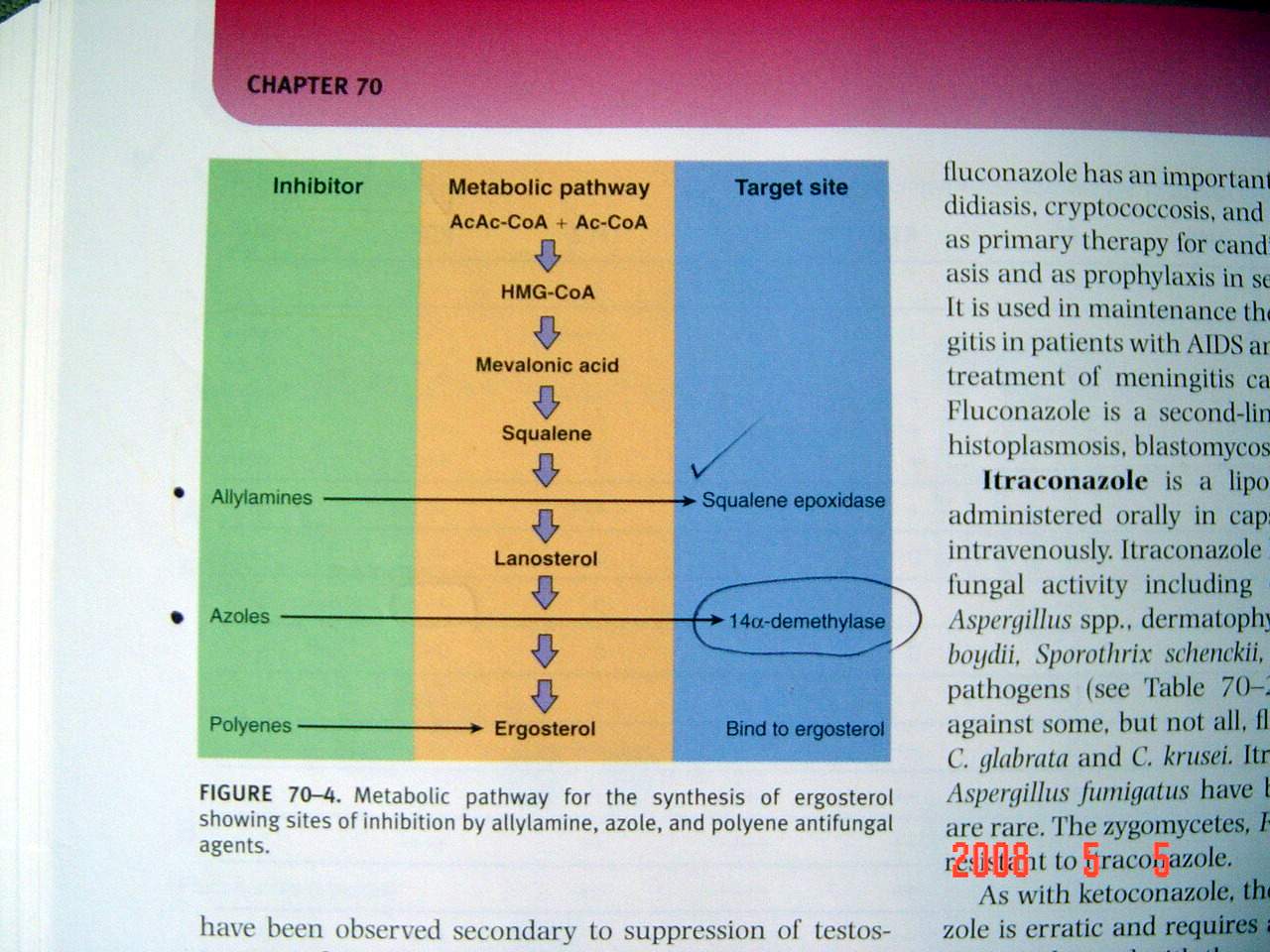
3. cell membrane- ergosterol (vs. cholesterol)

黴菌有關的角色

A.分解有機物 (腐生菌)

B.提供食物,製造藥物

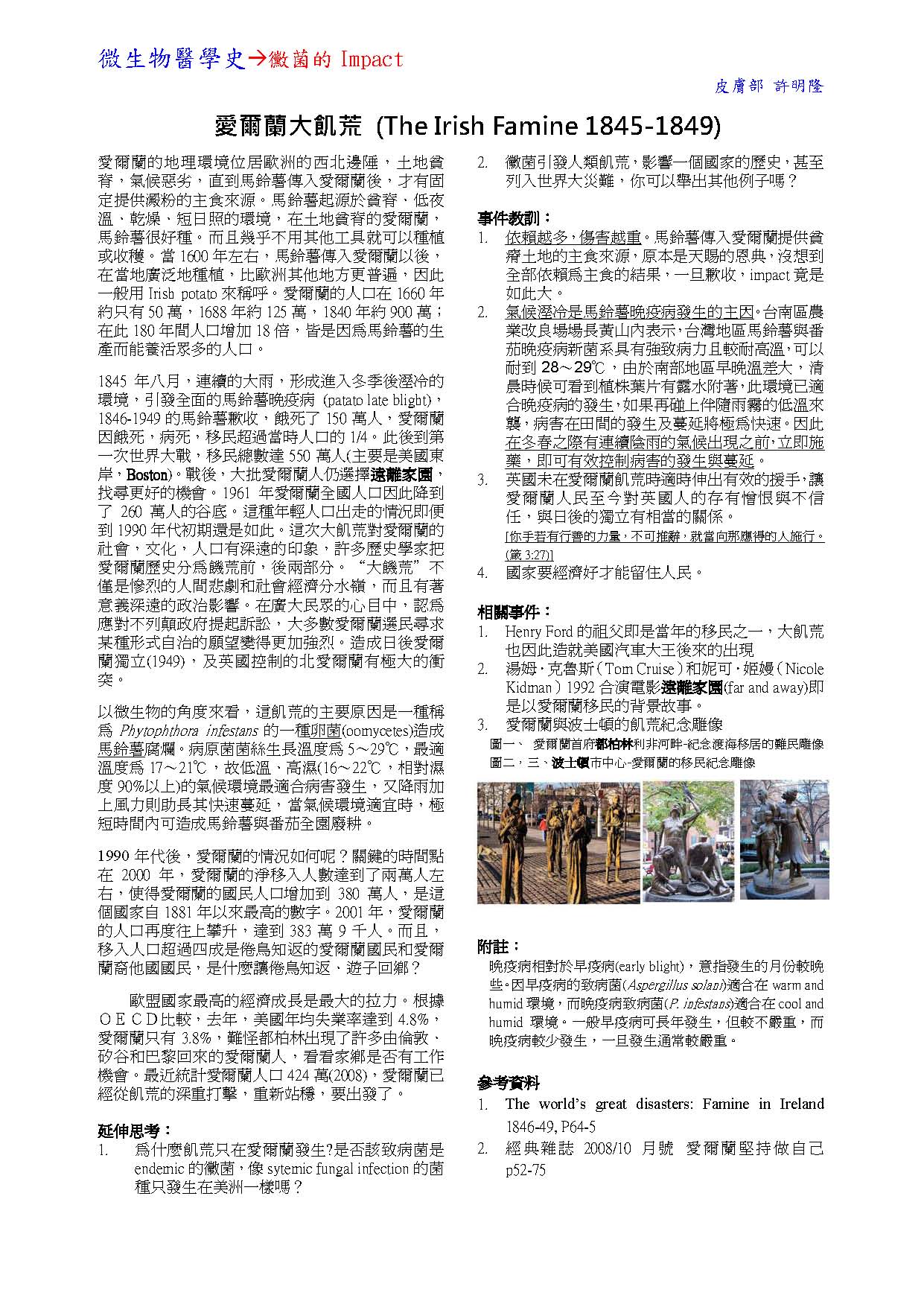
C.引起饑荒 (愛爾蘭 1846-50) ---馬鈴薯晚疫病(late blight)

D.可致病

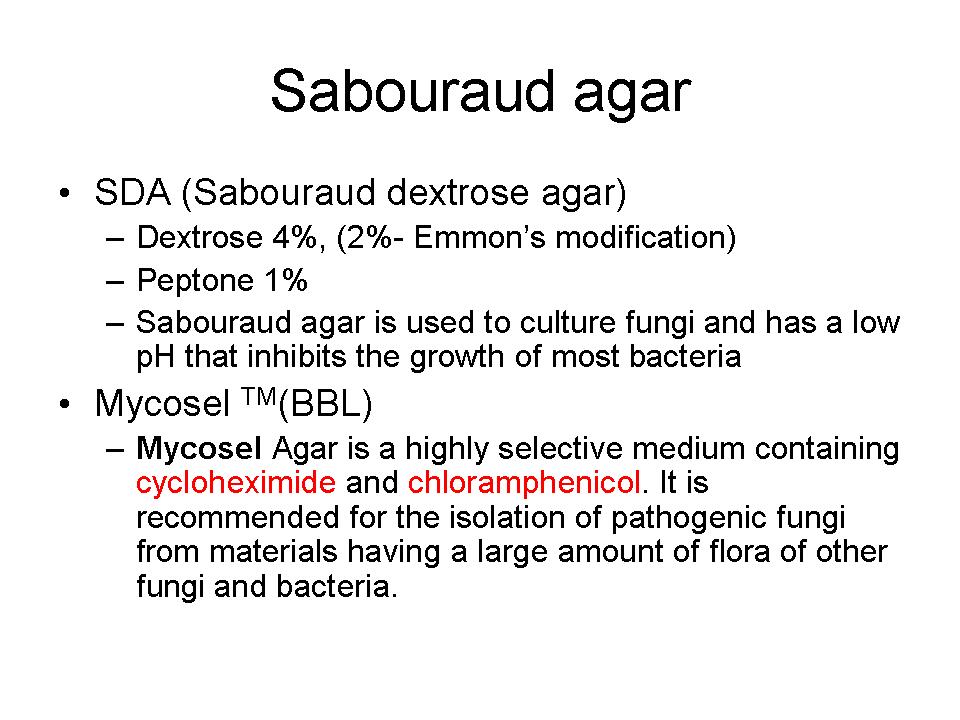
Fungus vs. Bacteria (重要觀念)size, growth, cell wall, cell membrane, nucleus, ribosomes, drug sensitivity…[菌絲體相連, (3 micron至數尺), 易培養(極少fastidious,Sabouraud's agar即可-SDA,Mycosel), 室溫即可, 長得慢, (2-4), 某些菌dimorphic, 一般MICyeast外不易做]

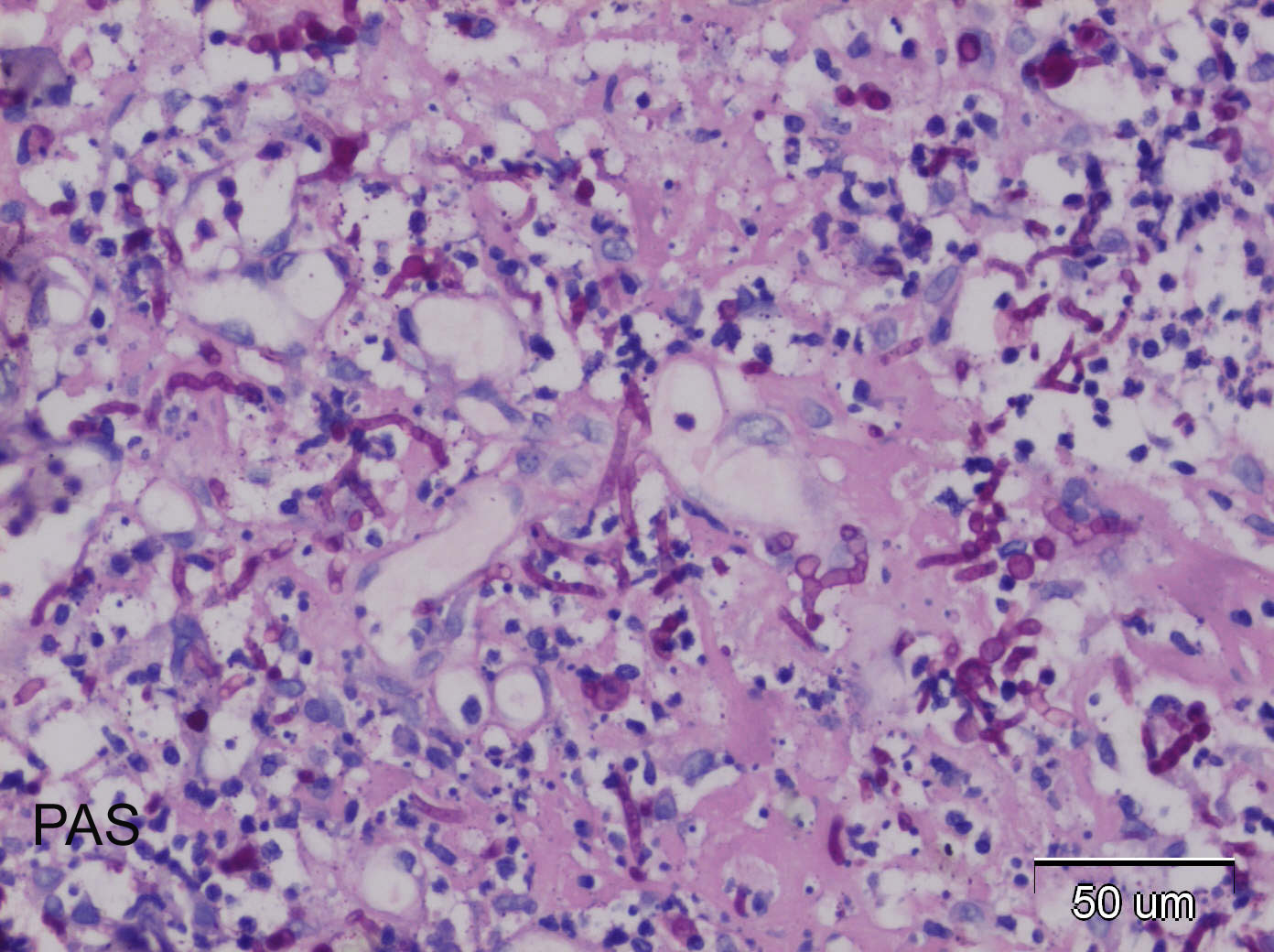
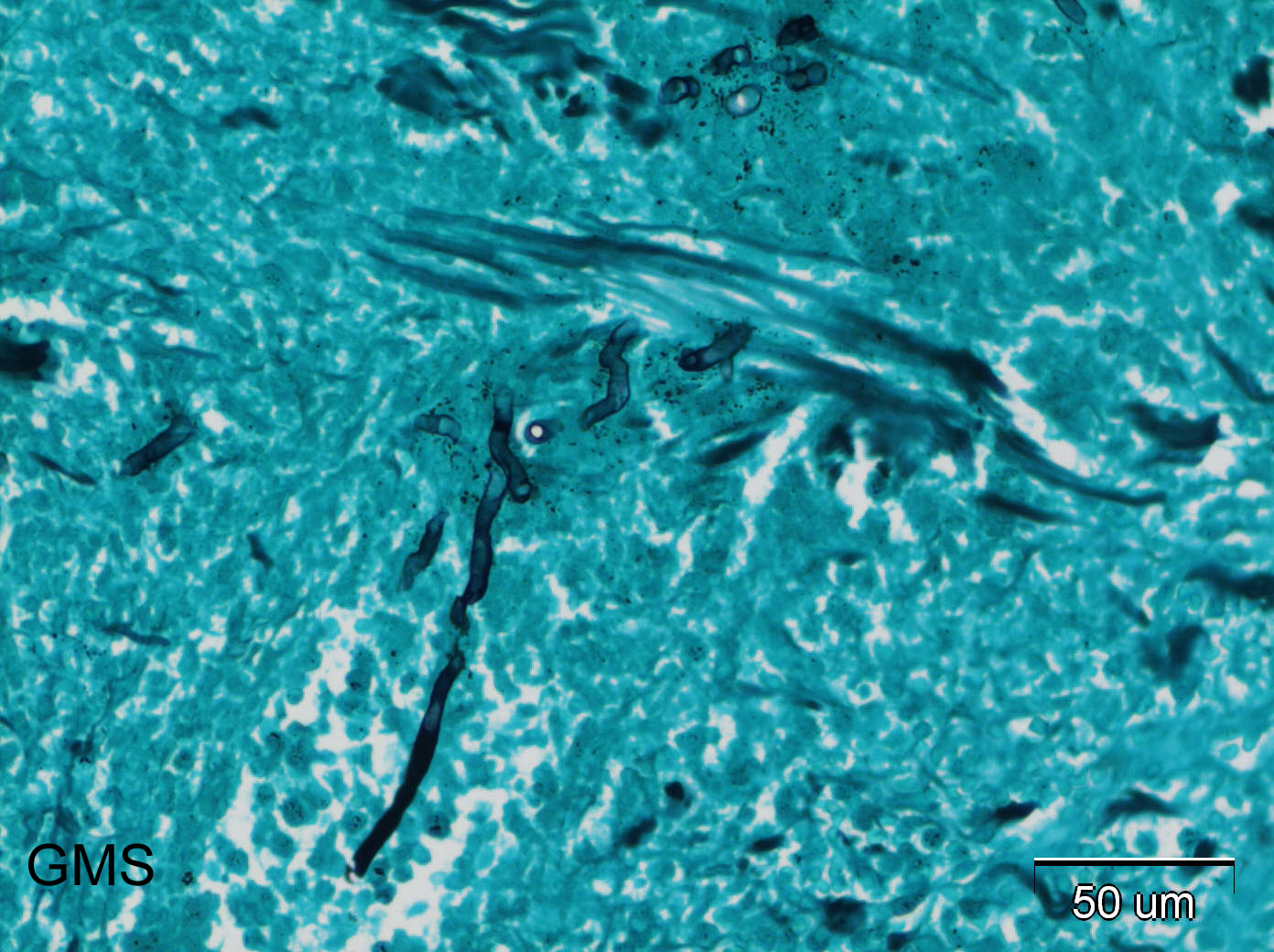
Stain— PAS*, GMS* vs Gram

Morphology-

  Molds,(Moulds) *                  Yeasts * (Candida, Cryptococcus)


Sexual state (teleomorph)

Asexual state (anamorph)

-many fungi reproduce by sexual(meiosis) and asexual (mitosis) means, which is important in taxonomy.

life cycle (sexual, asexual)

Taxonomy- Fungi (kingdom)


Phylum                                        Class            Order           Family          Genus          Species

Division      Subdivision        

(~mycota)  (~mycotina)          (~mycetes)  (~ales)         (~aceae)

                     Myxomycotina (Slime molds)                      

                     Eumycotina (True fungi) [exclude oomycetes, chytridiomycetes….].

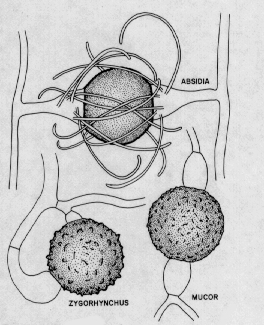
                                                     Zygomycetes        (zygospores)

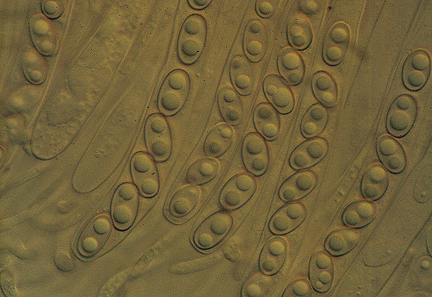
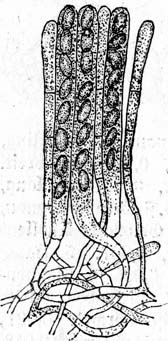
                                                     Ascomycetes        ( ascospres)

                                                     Basidiomycetes    (basidiospores)

                                                     Deuteromycetes   (fungi imperfecti)

致病

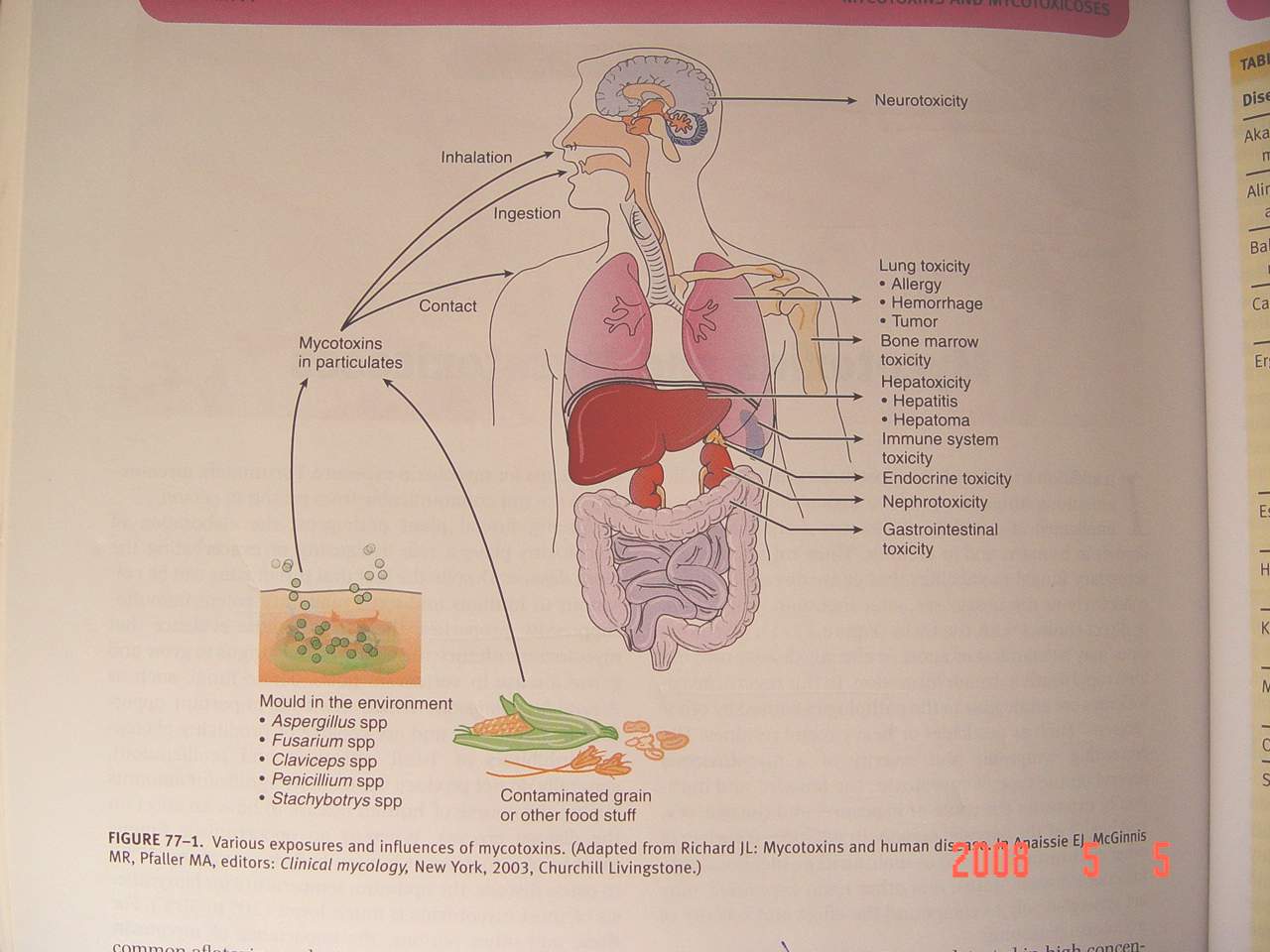
1.    中毒   mycetismus                         mycotoxicosis,

2.    過敏 (allergic aspergillosis)

3.    感染 (mycoses)


毒菇中毒,Amanita phalloides(肝臟壞死->肝臟移植)— amanitin

黃麴菌素與肝癌 (aflatoxin…..Aspergillus flavus toxin)

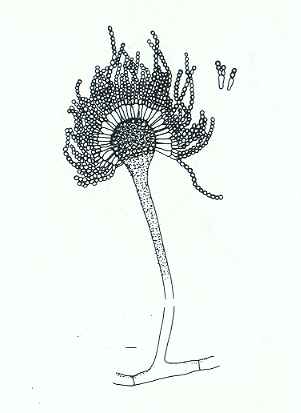
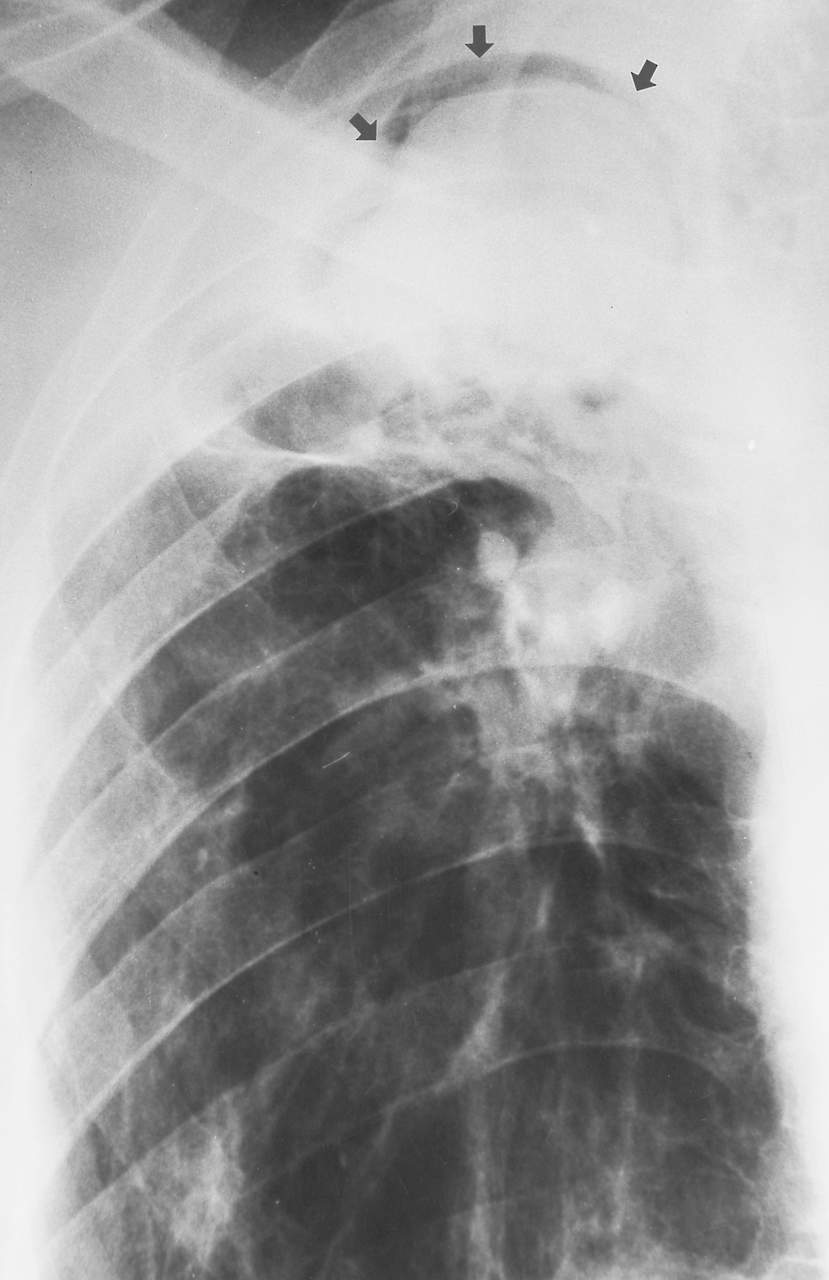
ABPA (allergic brochopulmonary aspergillosis), Aspergilloma (Fungus ball)

Fungal infections (Cutaneous, Subcutaneous, Systemic, Opportunistic mycoses)


Mycoses

分類

傳染途徑

致病方式

Cutaneous (Superficial, Dermatophytosis)-皮表或皮屑接觸 (lipophilic or keratinophilic)

Subcutaneous- 受傷植入

Systemic -     吸入pathogenic fungi, endemic (vs. epidemic)

Opportunistic - 宿主全身或局部抵抗力降低

診斷
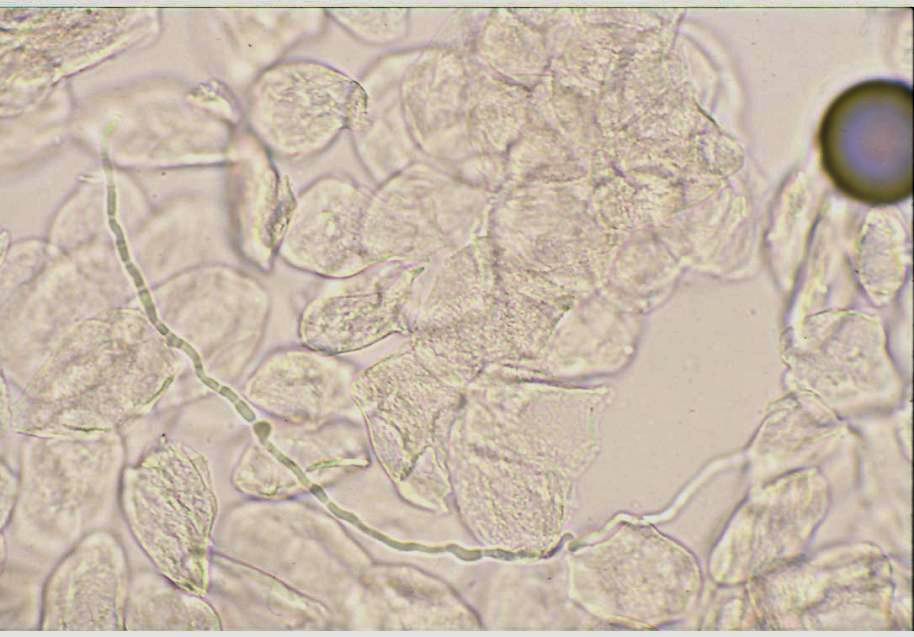
KOH
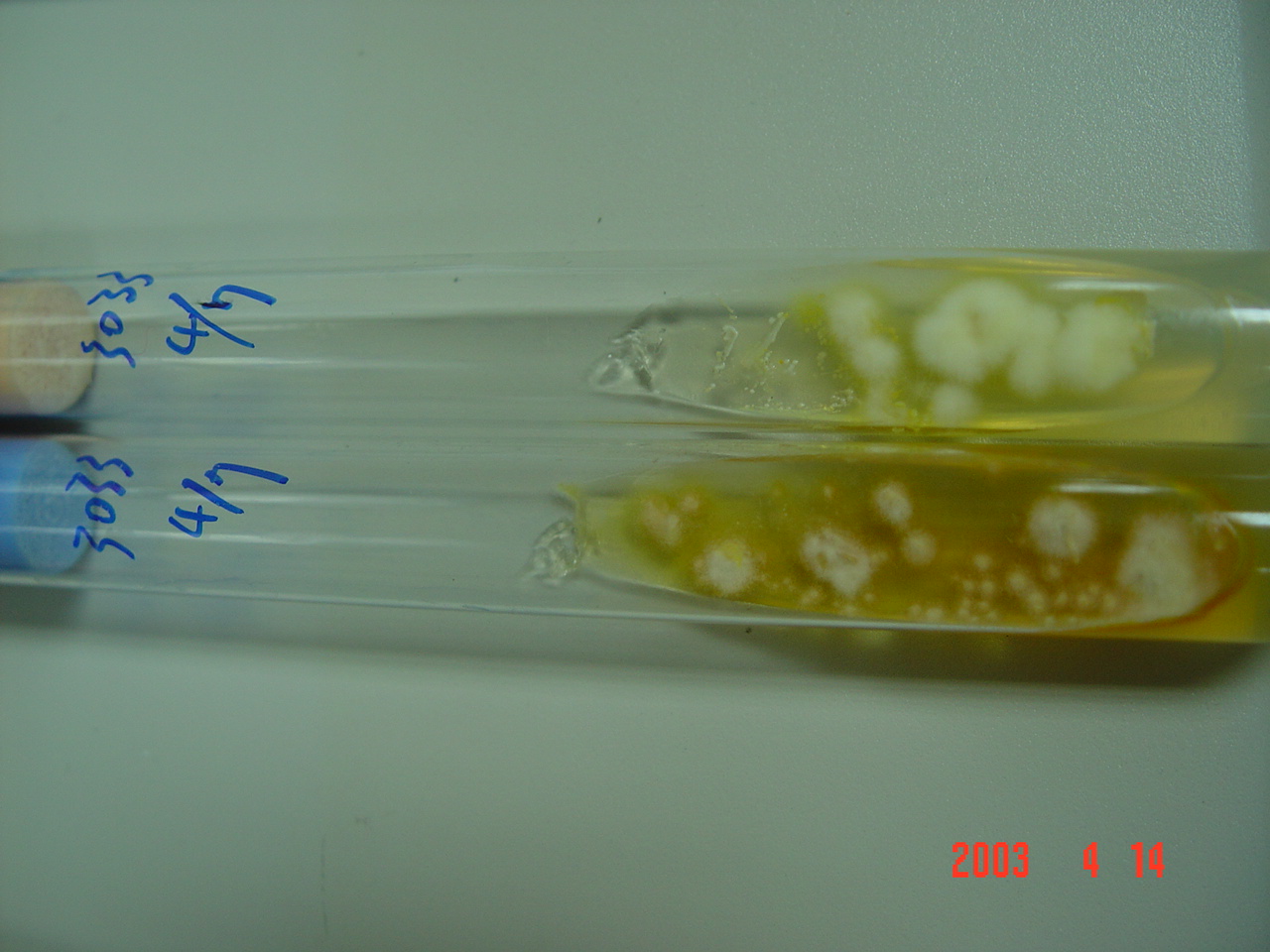
Culture
Biopsy

菌名

屬名+種名

(第一個字母大寫)

Candida albicans


代表性黴菌感染

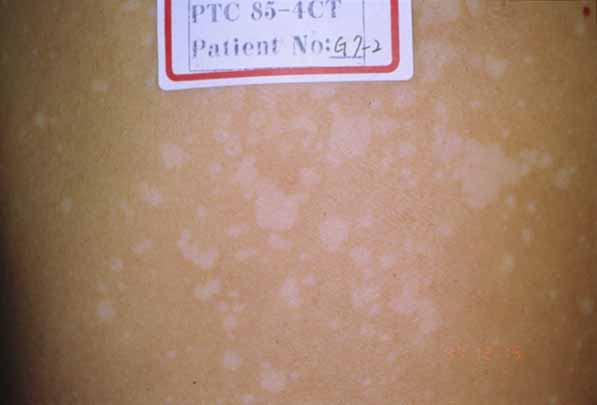
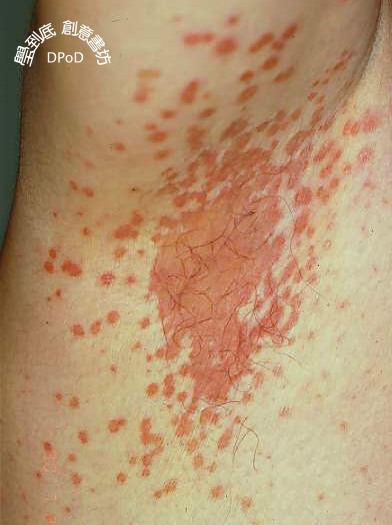
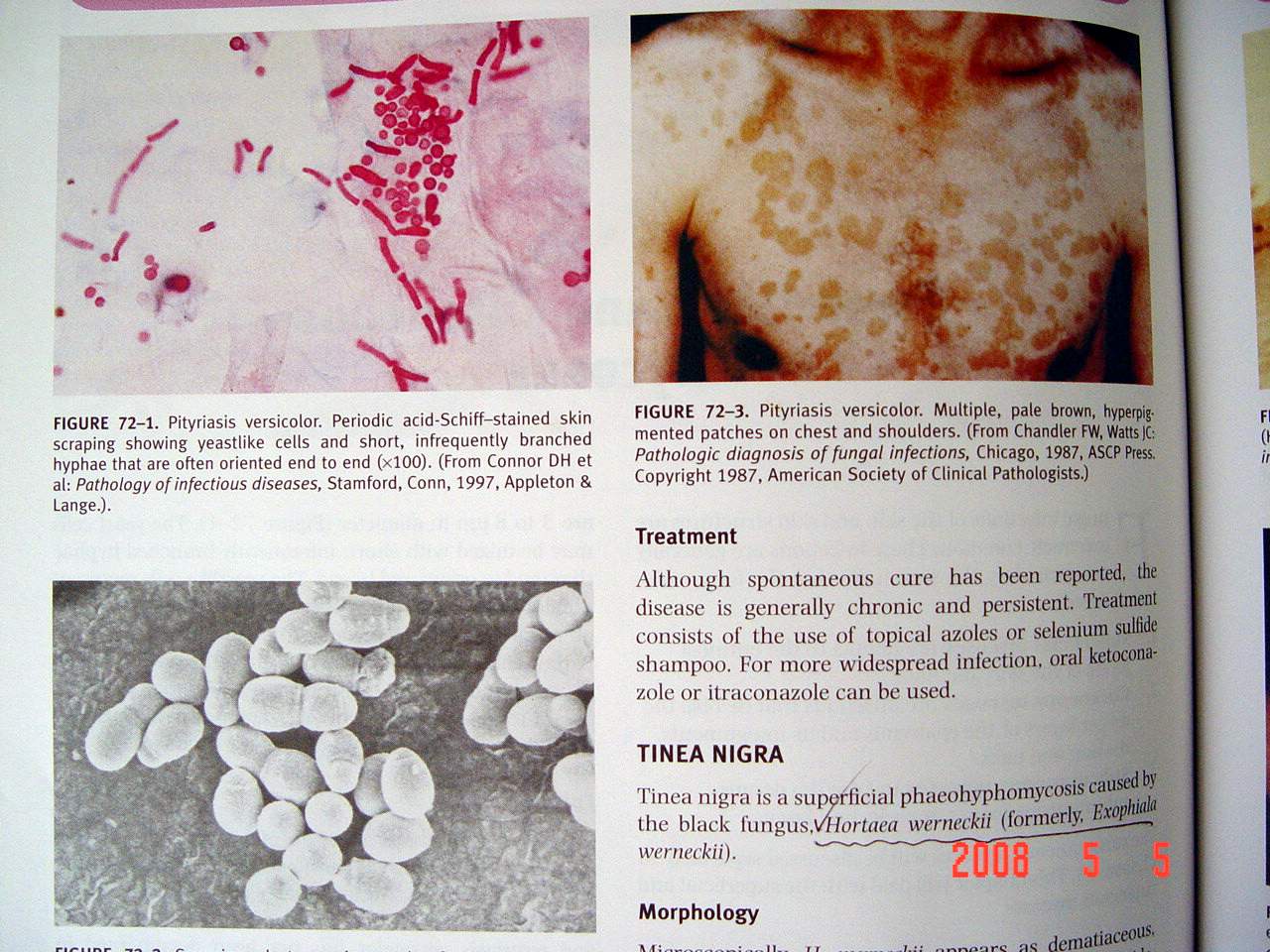
Cutaneous --        Tinea versicolor (汗斑)                       Malassezia furfur                      normal flora

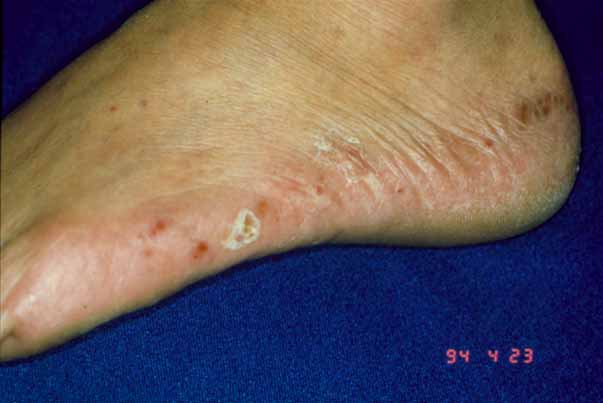
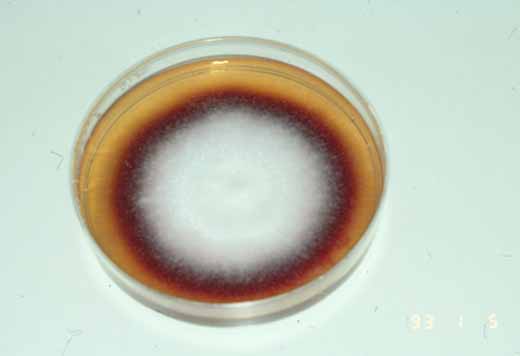
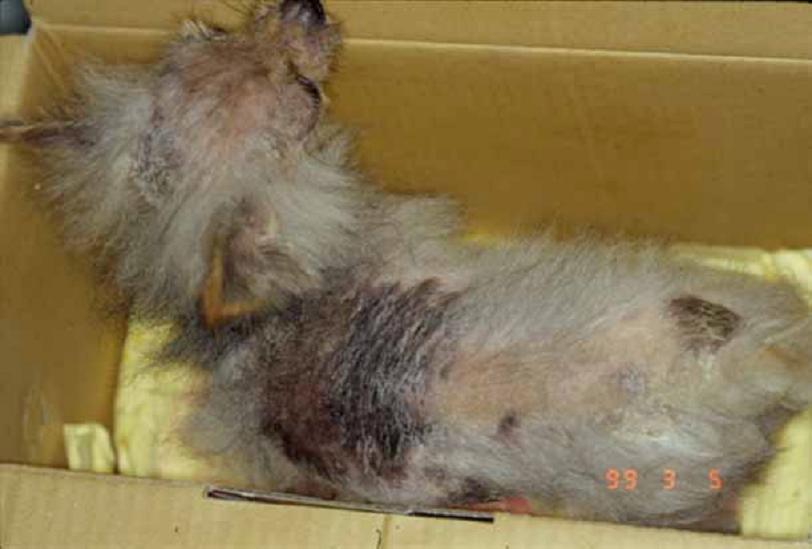
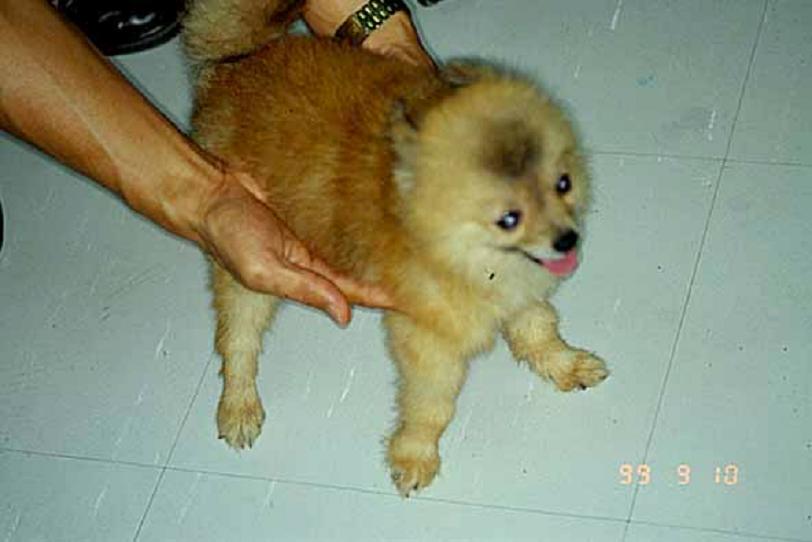
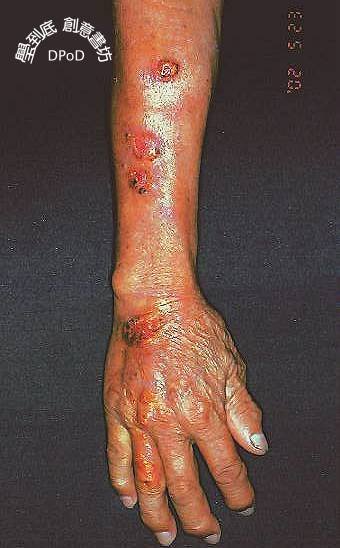
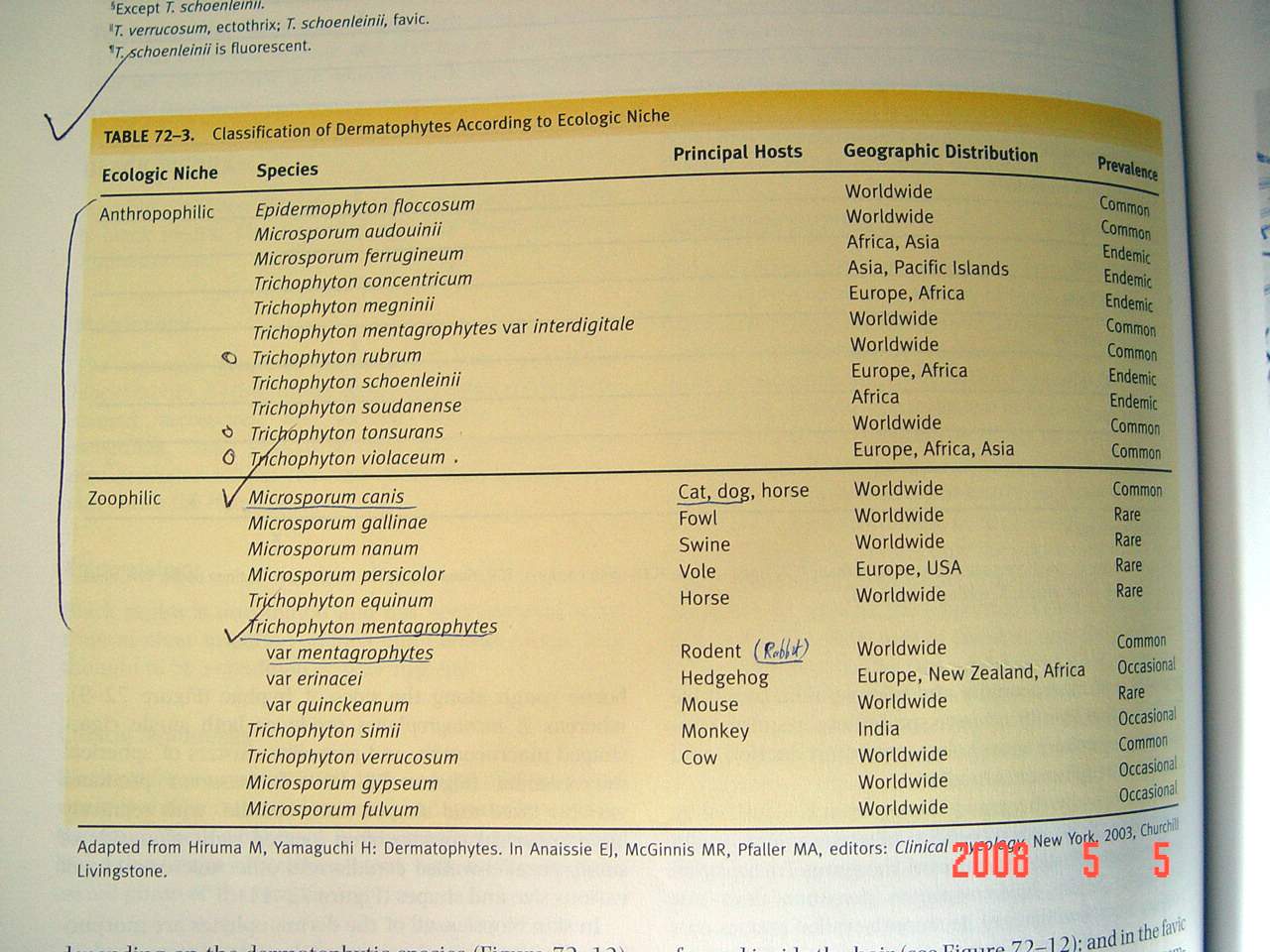
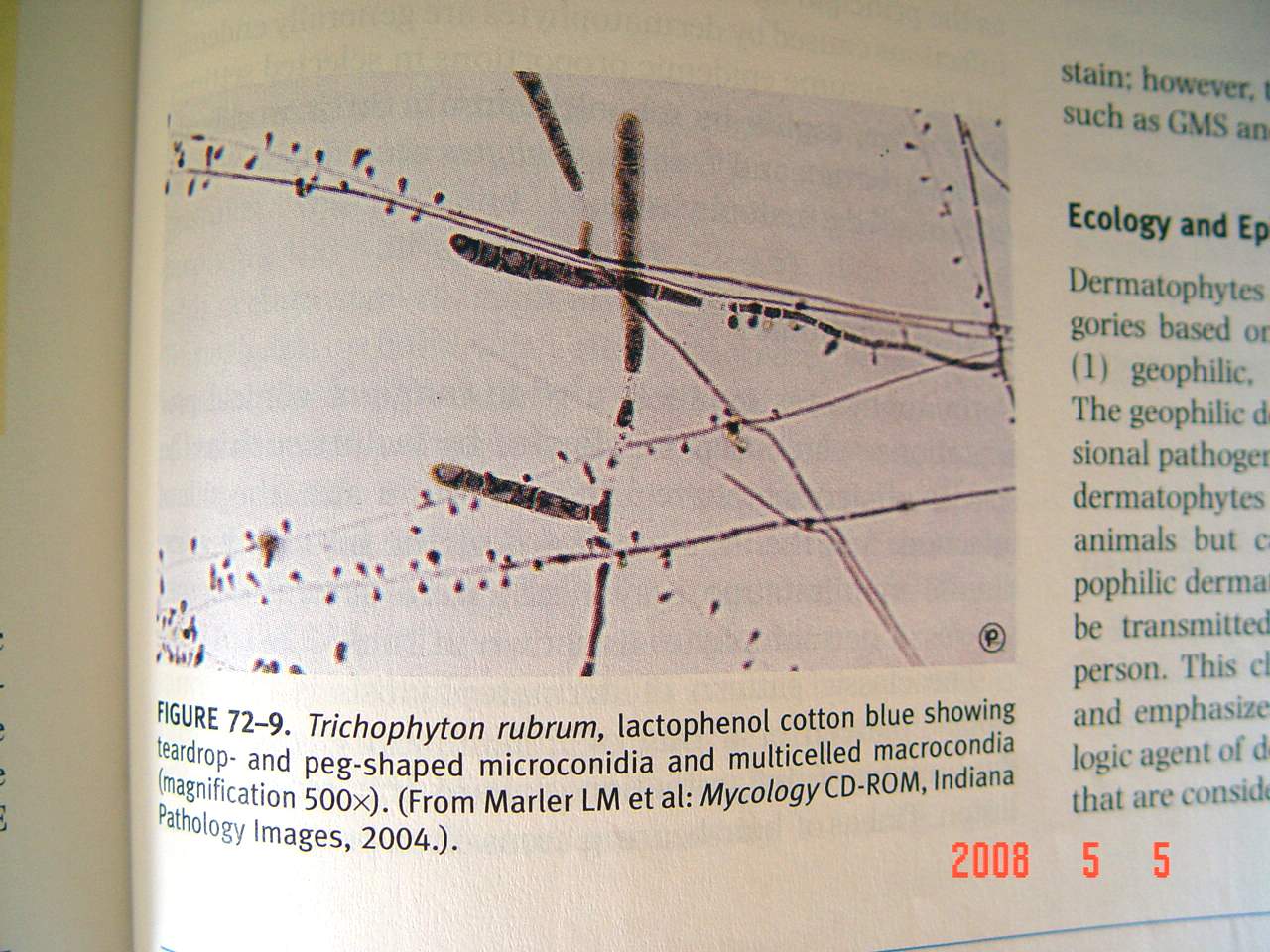
                                Tinea pedis (足癬;香港腳)               Trichophyton rubrum               (寵物,*土壤)

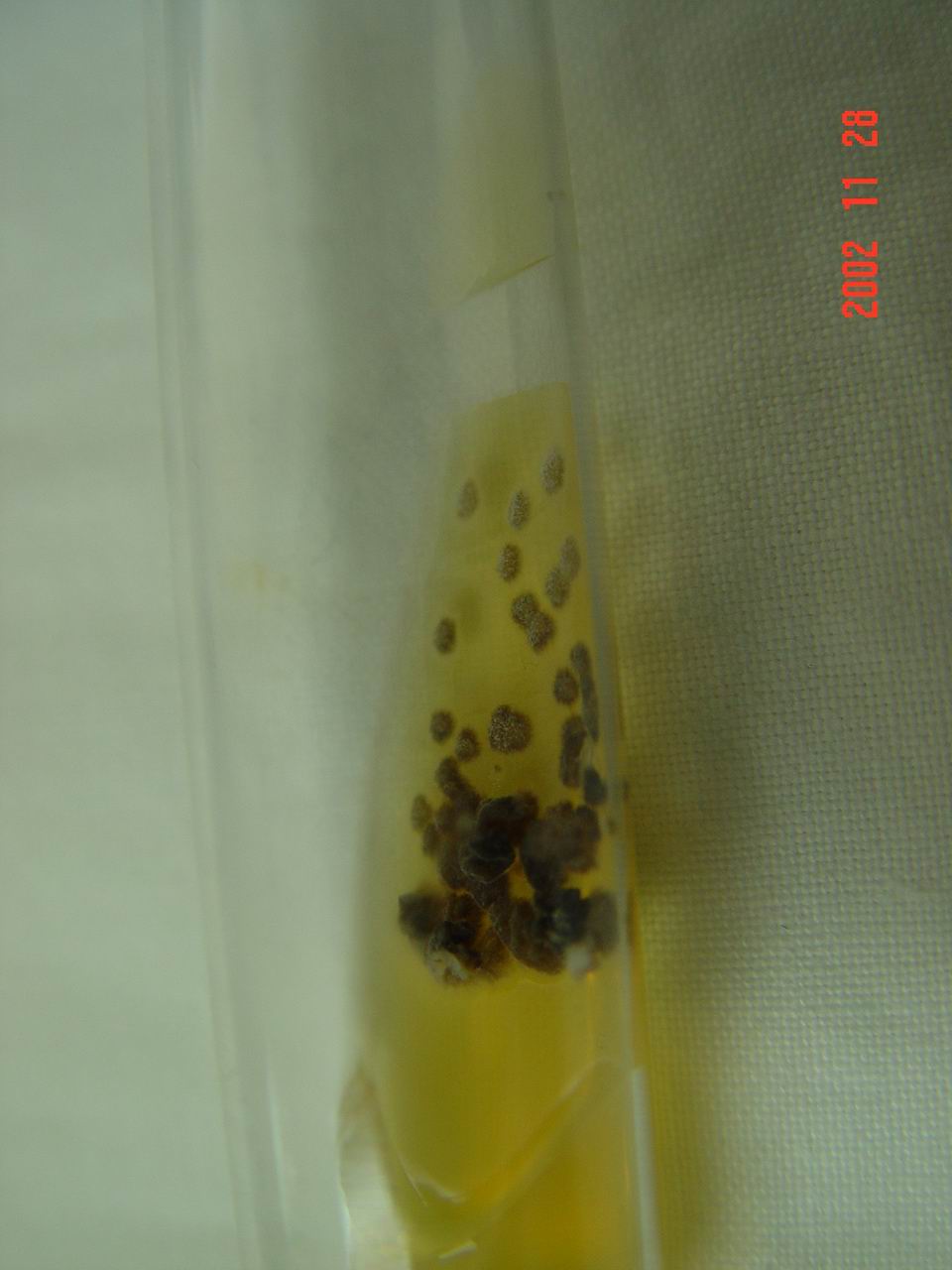
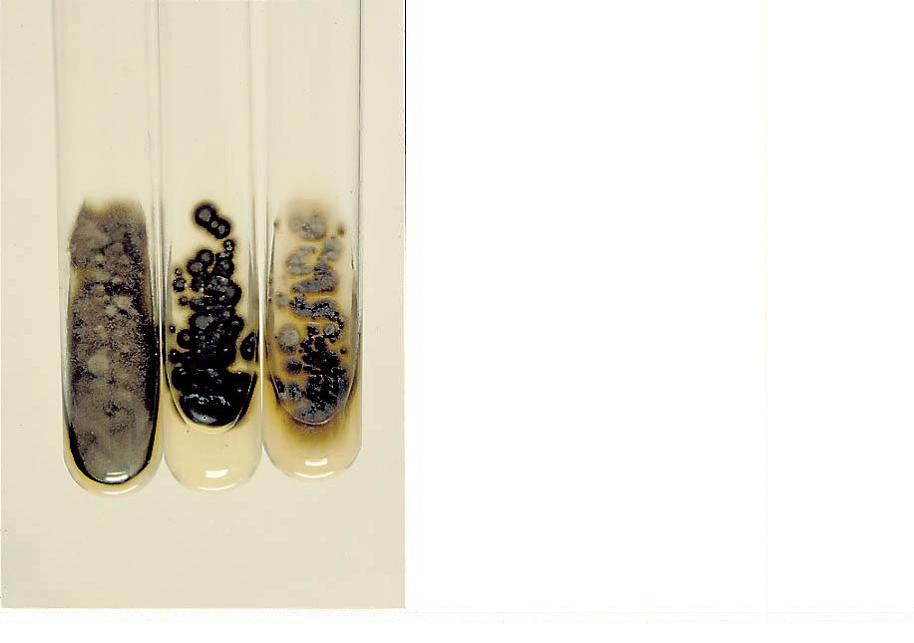
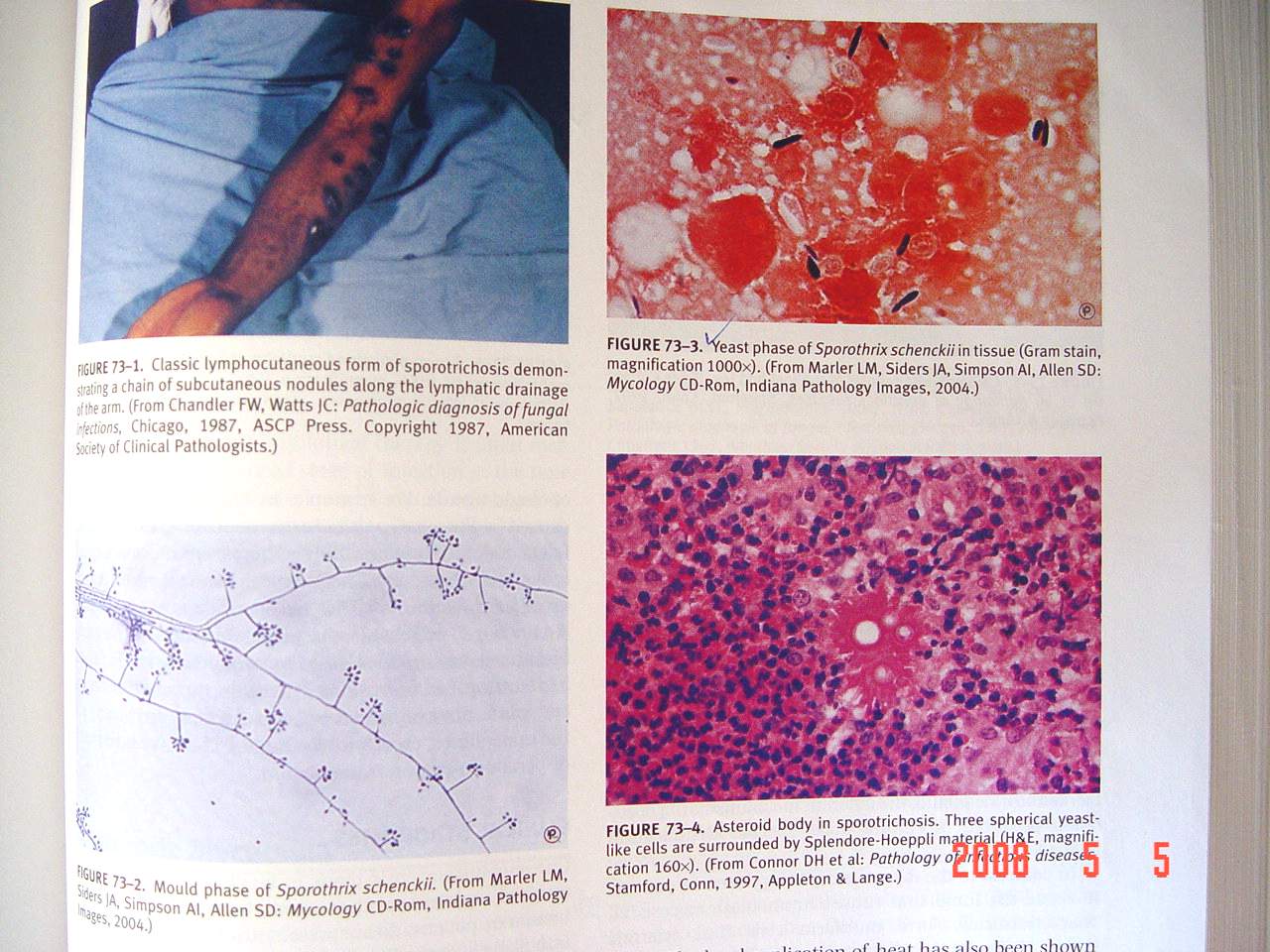
Subcutaneous -- Sporotrichosis (胞子絲菌症)             Sporothrix schenckii                土壤中黑菌

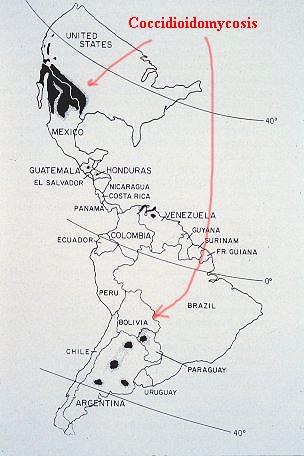
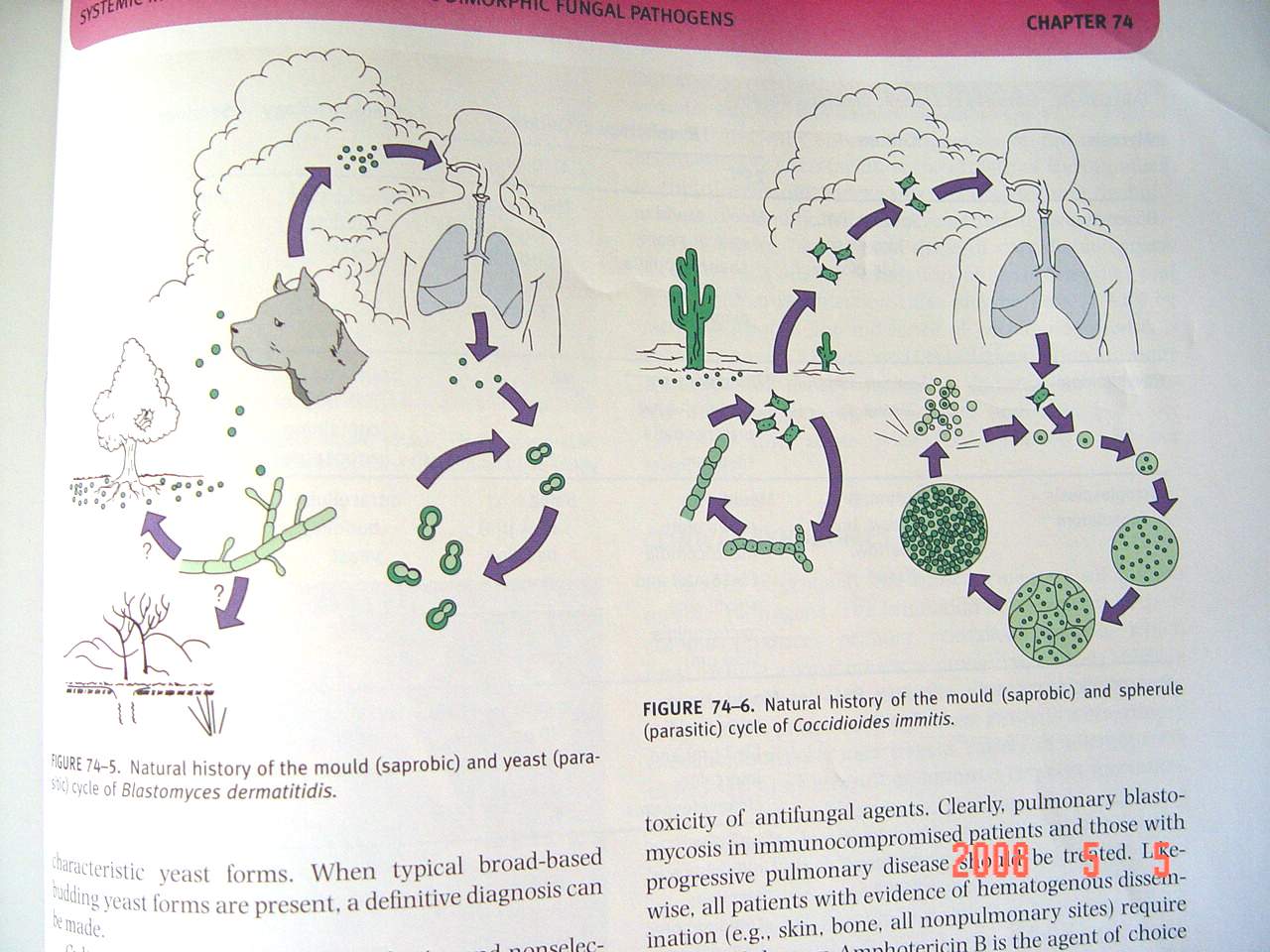
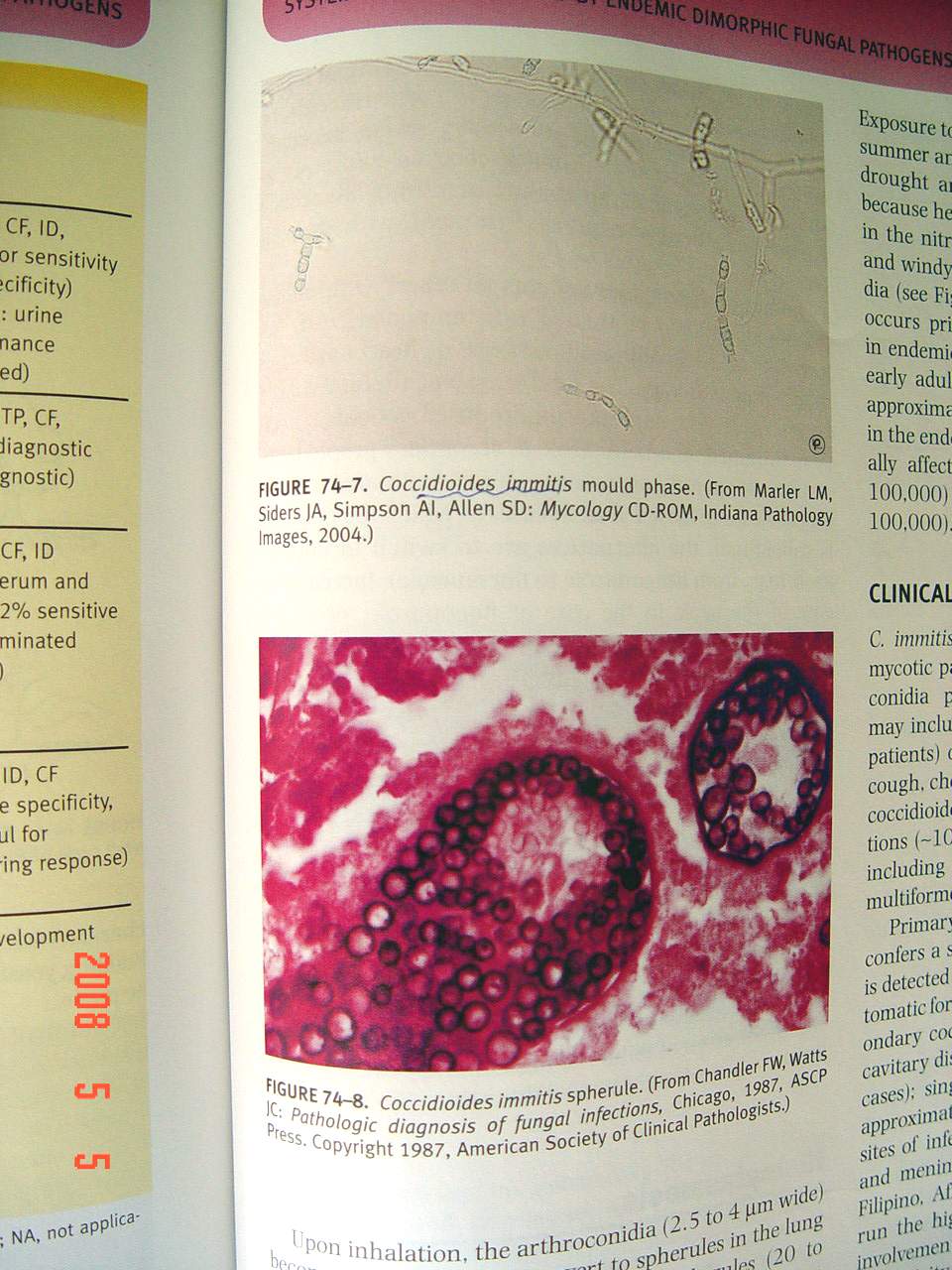
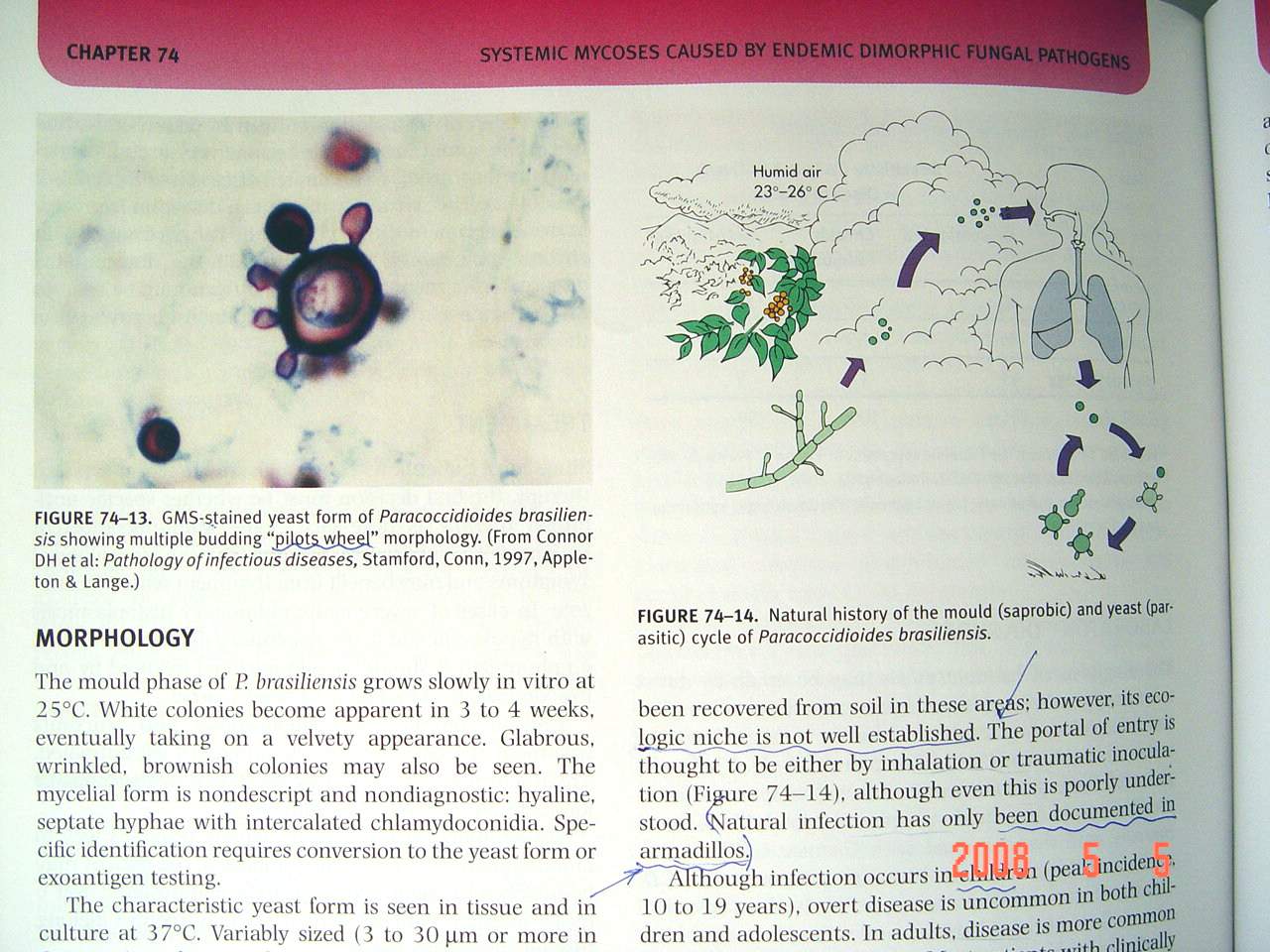
Systemic --           Coccidioidomycosis                            Coccidioides immitis               加州附近

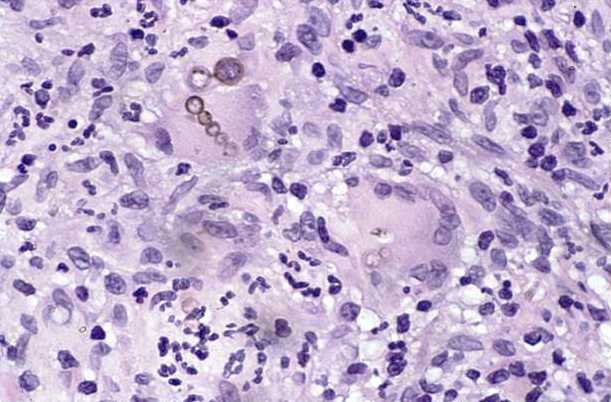
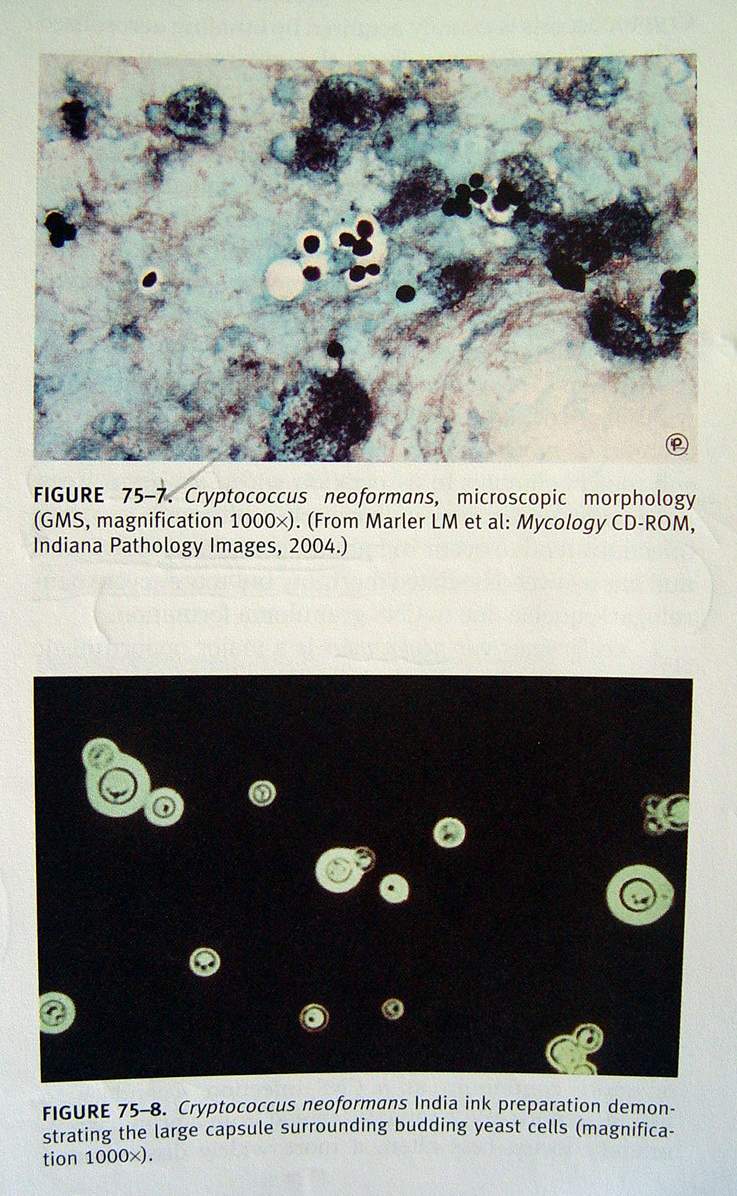
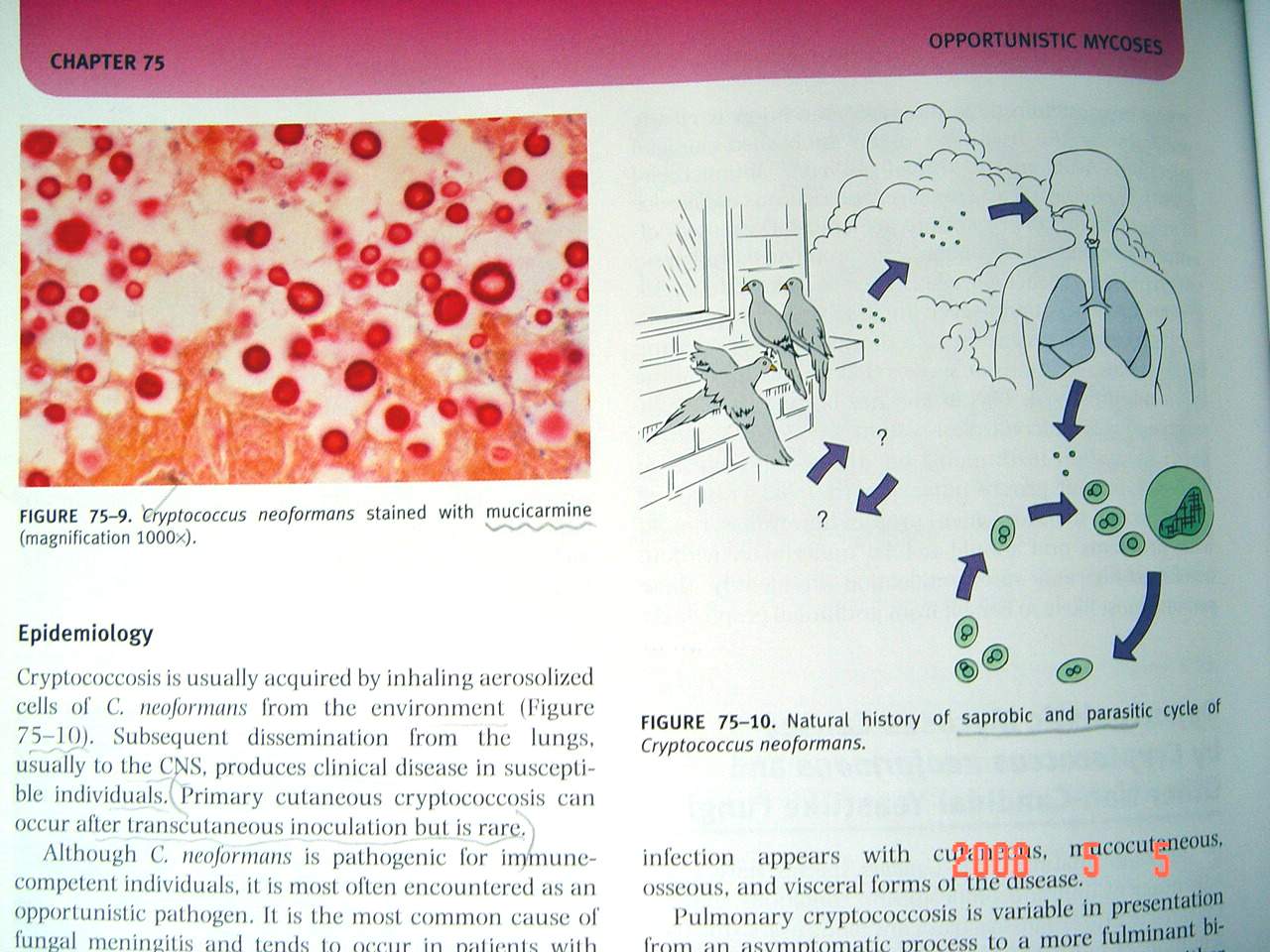
Opportunistic --   Cryptococcosis (隱球菌症)               Cryptococcus neoformans      鴿糞中

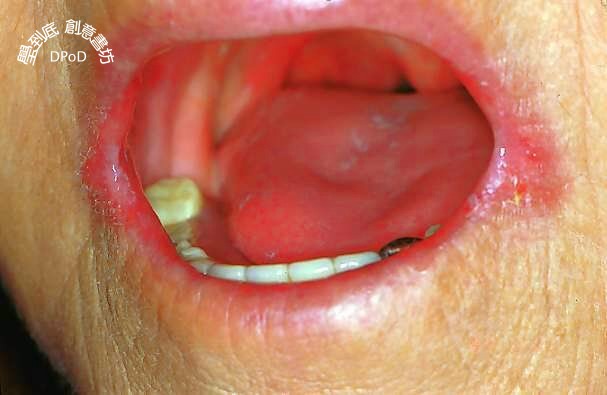
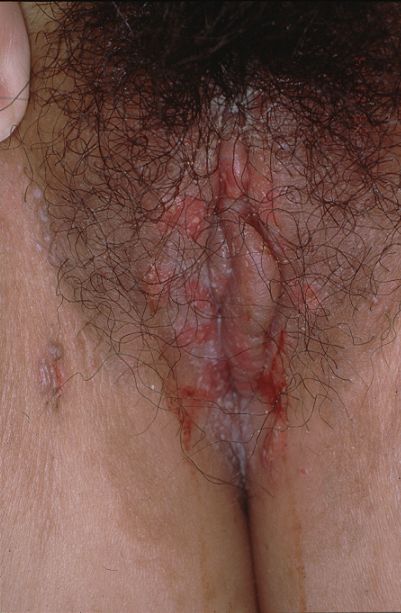
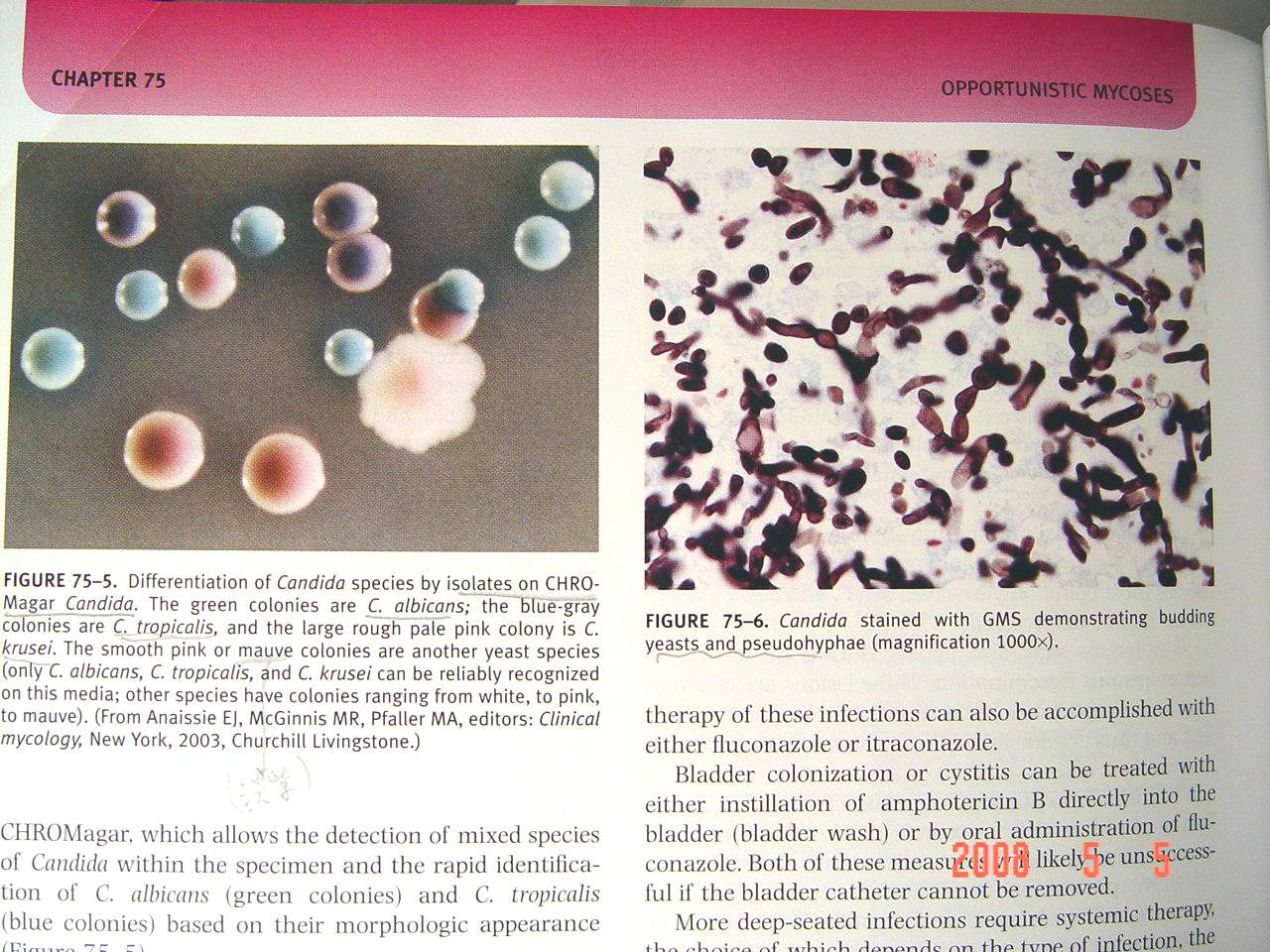
                                Candidiasis (念珠菌症)                     Candida albicans                     潮濕體表,黏膜

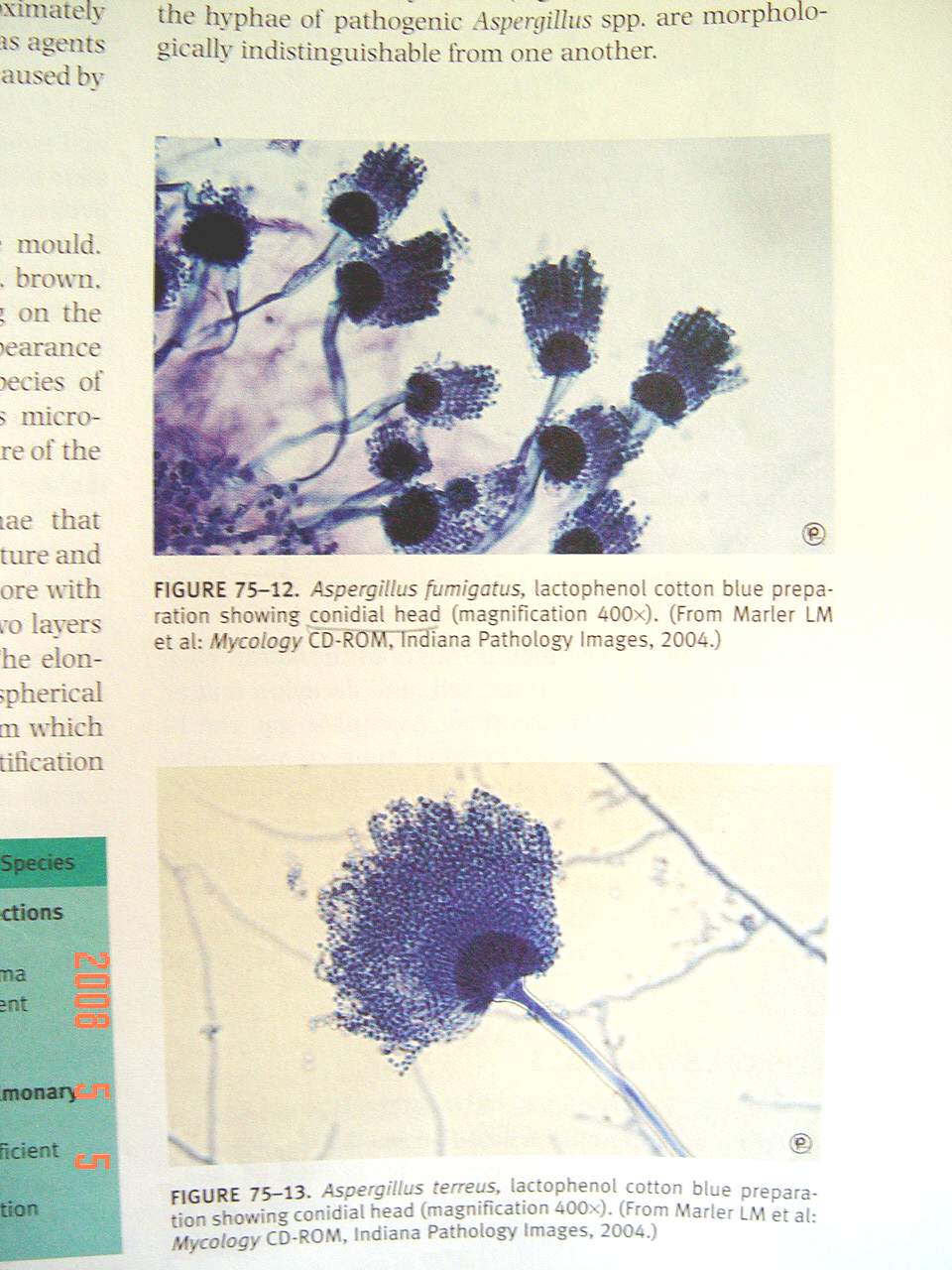
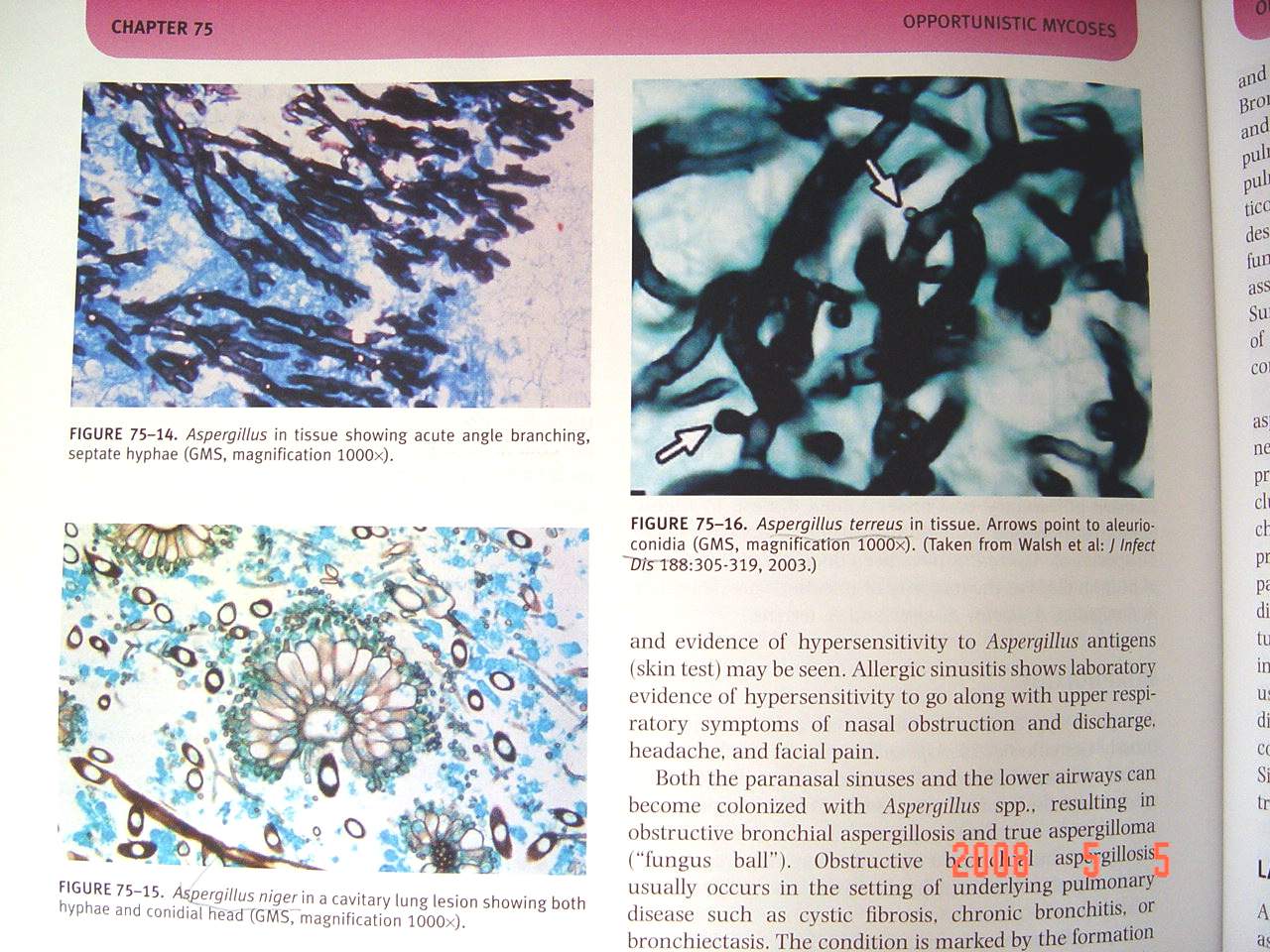
                                Aspergillosis (麴菌症)                        Aspergillus fumigatus              一般土壤中


Aerial hyphae. Hyphae that grow above the agar surface.

Aerobic. Having the ability to grow in the presence of oxygen.

Anaerobic. Lacking the abil1ty to grow in the presence of oxygen.

Annellide. A conidiogenous cell that gives rise to successive conidia in a basipetal manner. The apex of an annellide becomes longer and narrower as each subsequent conidium is formed and released. An apical ring composed of outer cell wall material, remains as each conidium is released.

Annelloconidium (pl. annelloconidia). A conidium formed by an annellide.

Apex (pl. apices). The tip.

Arthroconidium (pl. arthroconidia). A conidium formed by the modification of a hyphal cell(s) and then released by the fragmentationysis of a disjunctor cell or by fission through a thickened septum.

Ascospore. A haploid sexual spore that is formed by free cell formation in an ascus following karyogamy and meiosis.

Ascus (pl. asci). A saclike cell that gives rise to ascospore. Asci are characteristic of the Ascomycetes.

Asexual state. Reproduction in an organism by division or redistribution of nuclei, but without nuclear fusion, i.e., not by the union of two nuclei. Also known as the imperfect state.

Assimilation. The utilization of nutrients for growth, with oxygen serving as the final electron acceptor (Growth in the presence of oxygen. The utilization of nutrients for growth with oxygen acting as a terminal electron acceptor. C6H12O6+6O2-> 6CO2+6H2O)

Balloon form. Pertaining to a large globose conidium formed by some dermatophytes, especially Trichophyton tonsurans.

Basidiospore. A haploid sexual spore formed on a basidium following the process of karyogamy and meiosis

.

Budding. Asexual formation of small, rounded outgrowths from a parent cell. These will become conidia.

Capsule. A gelatinous covering around a cell. (e.q.Cryptococcus neoformans)

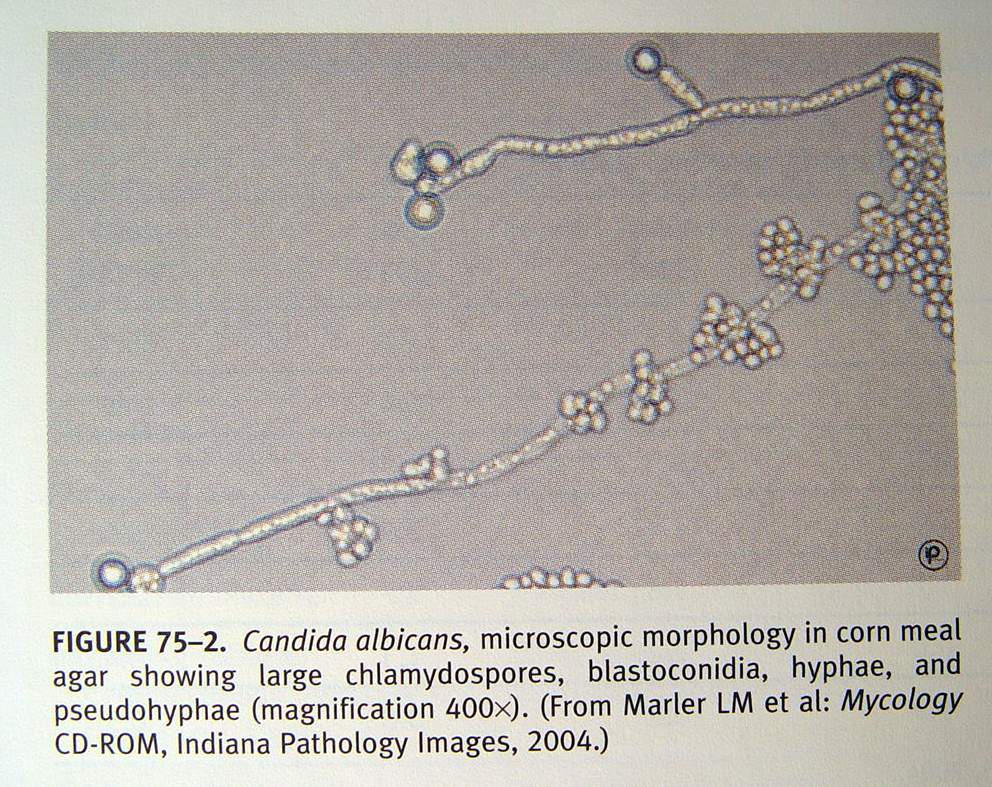
Chlamydoconidium (pl. chlamydoconidia). A rounded, enlarged conidium that usually has a thickened cell wall and functions as a survival propagule.

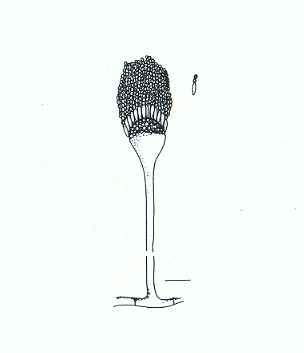
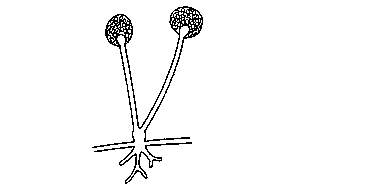
Columella (pl. columellae). A sterile dome like expansion at the apex of a sporangiophore.

Conidiogenous cell. A cell that gives rise to conidia.

Conidiophore. A specialized hypha upon which conidia develop.

Conidium (pl. conidia). An asexual, non-motile, usually deciduous propagule that is not formed by cytoplasmic cleave, free cell formation, or by conjugation.

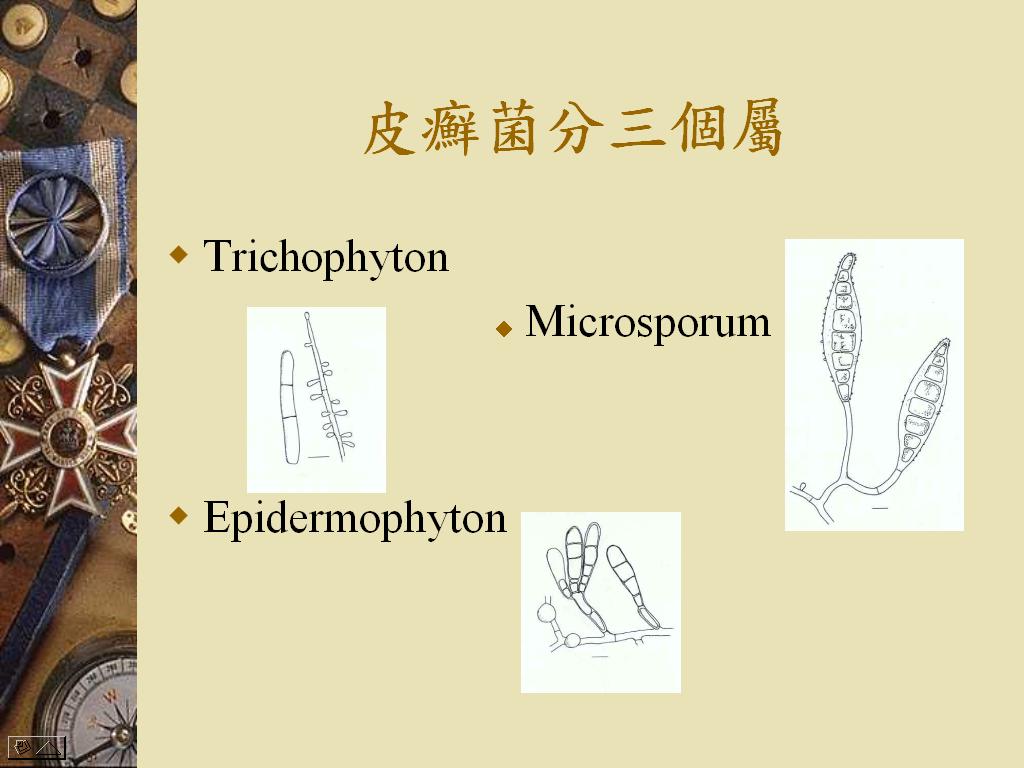
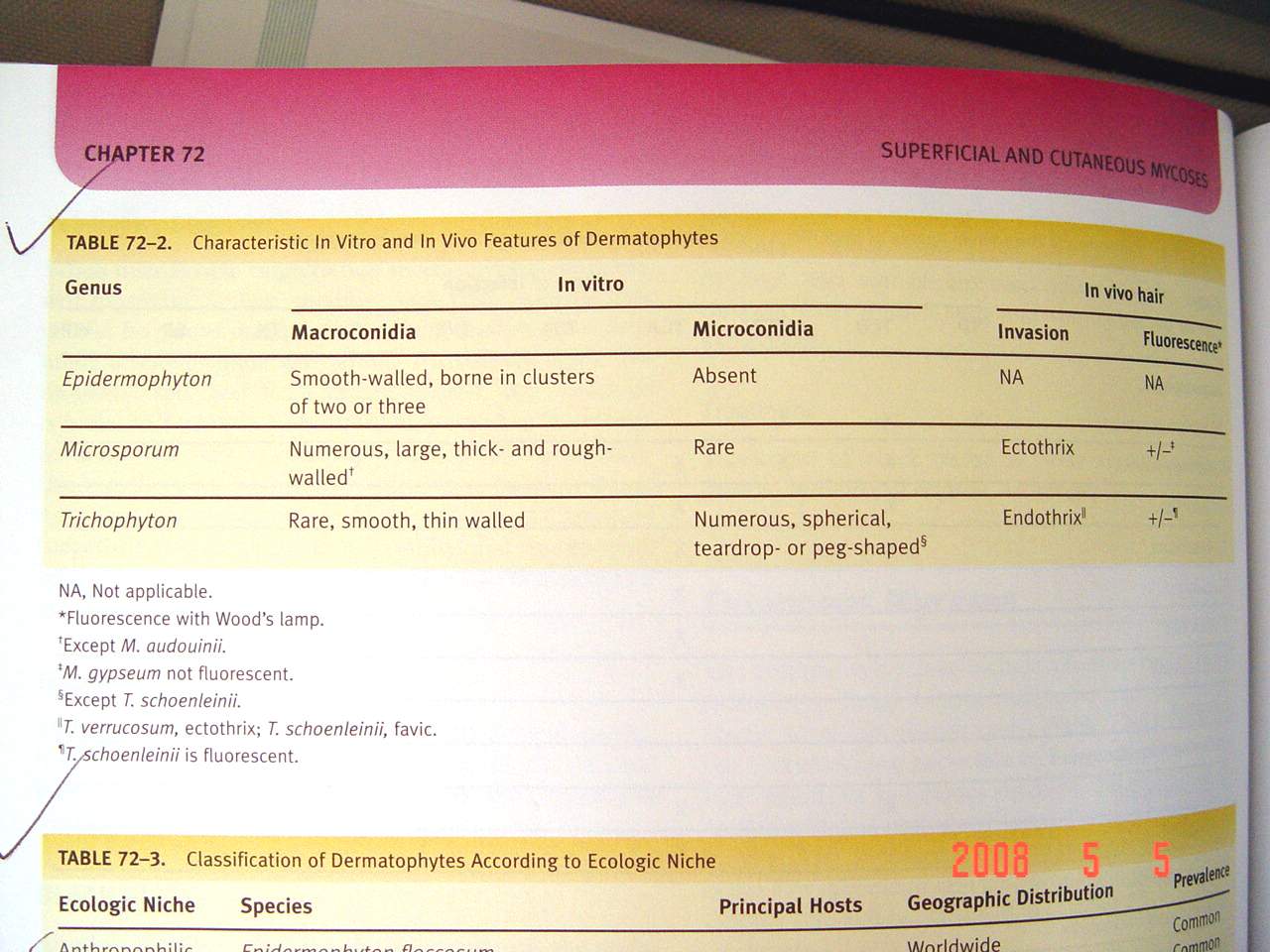
Dermatophyte. A fungus in the genus Epidermophyton, Microsporum, or Trichophyton that infects hair, nail, or skin.

Dimorphic. Having two different morphologic forms.

Endospore. A spore formed within a spherule by a cleavage process following karyogamy and mitosis.

Favic chandelier. A repeatedly branched cluster of hyphal apices that resembles a chandelier.

Fermentation. The ability to utilize nutrients for growth, with organic compounds serving as the final electron acceptor (Growth in the absence of oxygen. The ability to utilize nutrients for growth, with organic compounds serving as the final electron acceptors. C6H12O6->2C2H5OH+2CO2)

Fungus (pl. fungi). A eukaryotic, unicellular to filamentous, achlorophyllous organism having a absorptive nutrition. A fungus reproduces by sexual, asexual, or both means.

Fusiform. Tapering at both ends; spindle shaped.

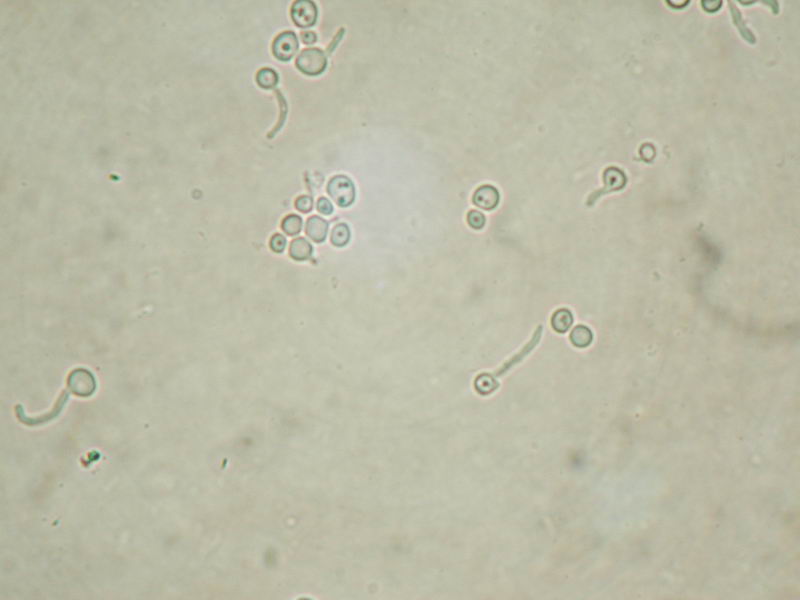
Germ tube. A hyphal initial developing from a conidium or spore. (characteristic of Candida albicans)

Hypha (pl. hyphae). An individual filament of a fungus. A single strand of fungal cells; results from cell division without separation of newly formed cells; may be septate (frequent cross walls) or sparsely sepate (sparse cross walls).

    vegetative: penetrate the agar

    aerial: above the agar

    fertile: bear reproductive structures

    hyaline: lightly pigmented

    dematiaceous: darkly pigmented due to melanin in cell wall

Macroconidium (pl. macroconidia). The larger of two conidia of two different sizes that are produced in the same manner by a single fungus.

Metula (pl. metulae). A sterile branch upon which phialides of some species of Aspergillus and Penicillium develop.

Microconidium (pl. microconidia). The smaller of two conidia of two different sizes that are produced in the same manner by a single fungus.

Mycelium. The aggregated mass of hyphae making up a fungus.

Mycology. The branch of biology that deals with the study of fungi.

Mycosis. (pl. mycoses): A diesease produced by a fungus

Phialide. A type of conidiogenous cell that gives rise to successive conidia from a fixed site in a basipetal manner. A phialide does not increase in length as the conidia are formed, and its apex does not become smaller in diameter. A collarette is often present at the apex of the phialide.

Phialoconidium (pl. phialoconidia). A conidium produced by a phialide.

Pseudohypha (pl. pseudohyphae). A series of blastoconidia that have remained attached to each other forming a filament. The blastoconidia are often elongated with the points of attachment between adjacent cells being constricted.

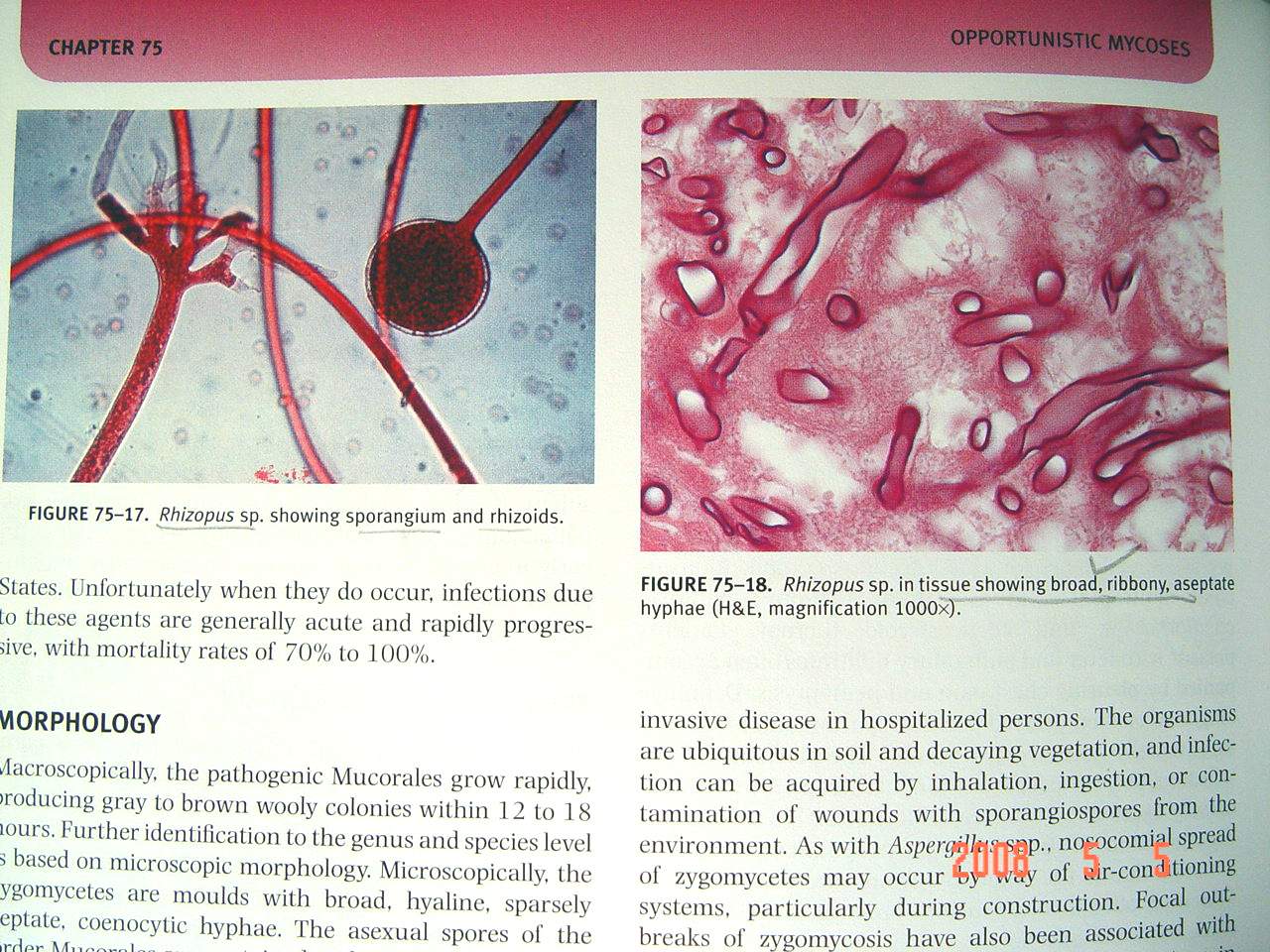
Rhizoid. Pertaining to a root like group of hyphae.

Sexual state. The portion of the life cycle in which the organism reproduces by the union of two nuclei. Also known as the perfect state.

Spiral hypha. Hypha forming coiled or screw-like turns.

Sporangiolum (pl. sporangiola). A sporangium that contains a small number of sporangiospores. Some sporangiola may contain only one sporangiospore.

Sporangiophore. A specialized hypha that gives rise to a sporangium.

Spore(s). A reproductive propagule that forms either following meiosis or asexually by a cleavage process. (Cells, or a unit of several cells, produced by the fungus and capable of functioning like a seed, i.e., developing into a mature fungus; units of dissemination or reproduction; result from sexual reproduction or are produced asexually in sac-like swellings called sporangia.)

Stolon. A runner.

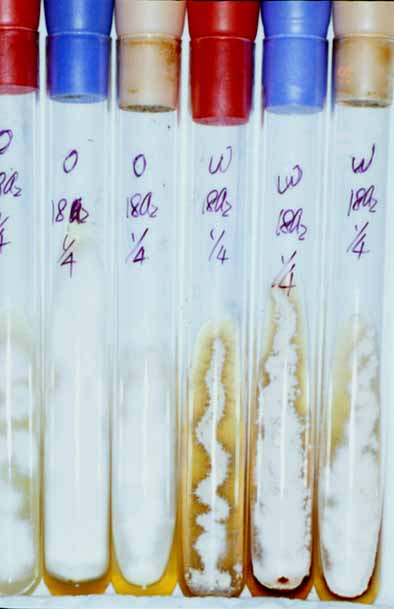
Thallus. mycelial mat; specifically, colonial growth from a single spore or conidium (also called a colony).

Tuberculate. Having finger like or wart like projections.

Vesicle. A swollen cell; the swollen apices of some conidiophores or sporangiophores.

Yeast. A unicellular budding fungus that reproduces by sexual, asexual, both means.

Zygospore. A resting spore in which meiosis will occur. Zygospores result from the fusion of two similar hyphal elements. They are characteristic of the Zygomycetes.

http://bugs.bio.usyd.edu.au/Mycology/Glossary/glossary_a_b.shtml (reference for mycology terms)

http://www.med.ncku.edu.tw/HsuML/mycology/2006mm1一張講義.htm


Imporatnt Figs and Tables in textbook


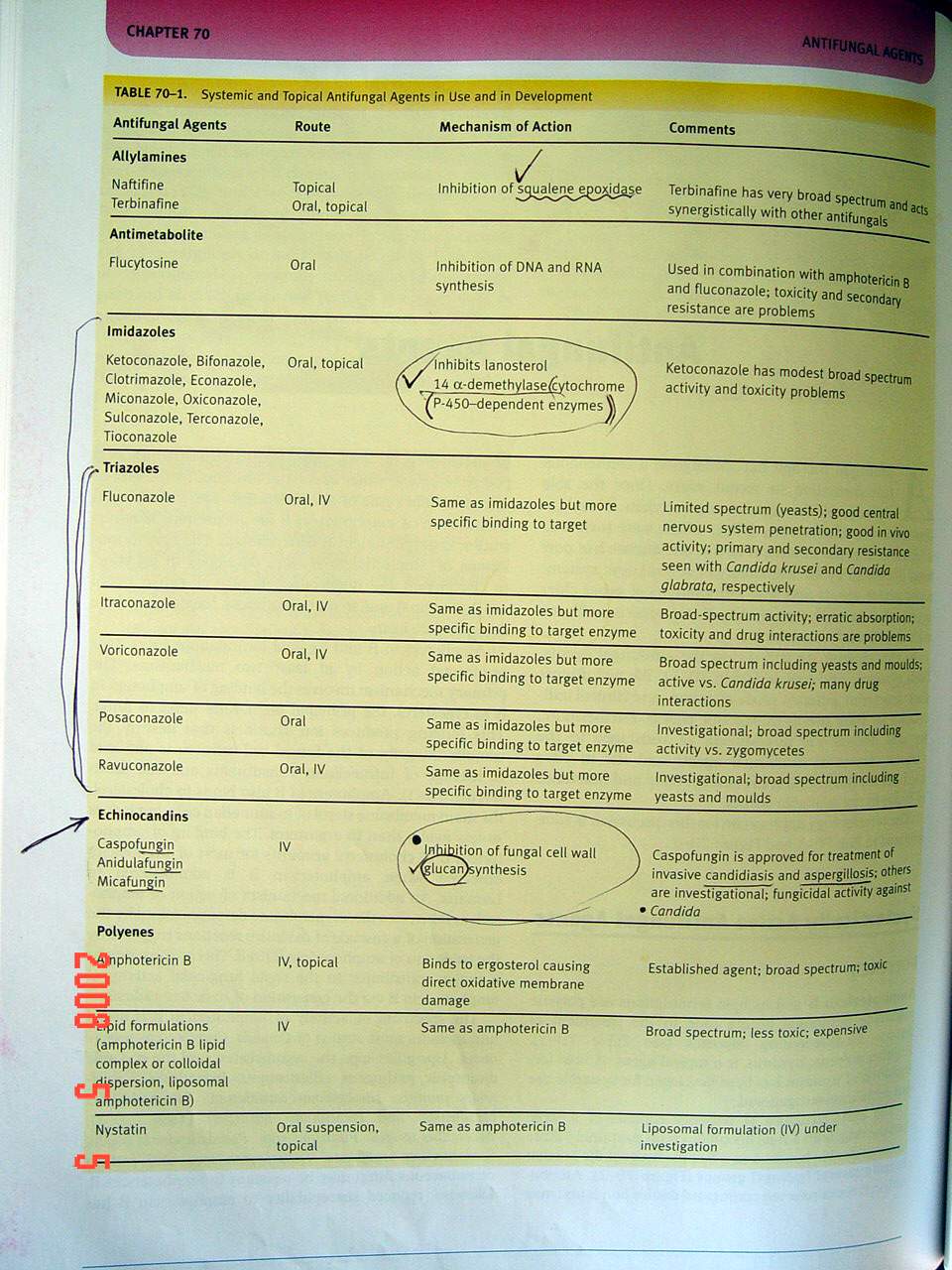
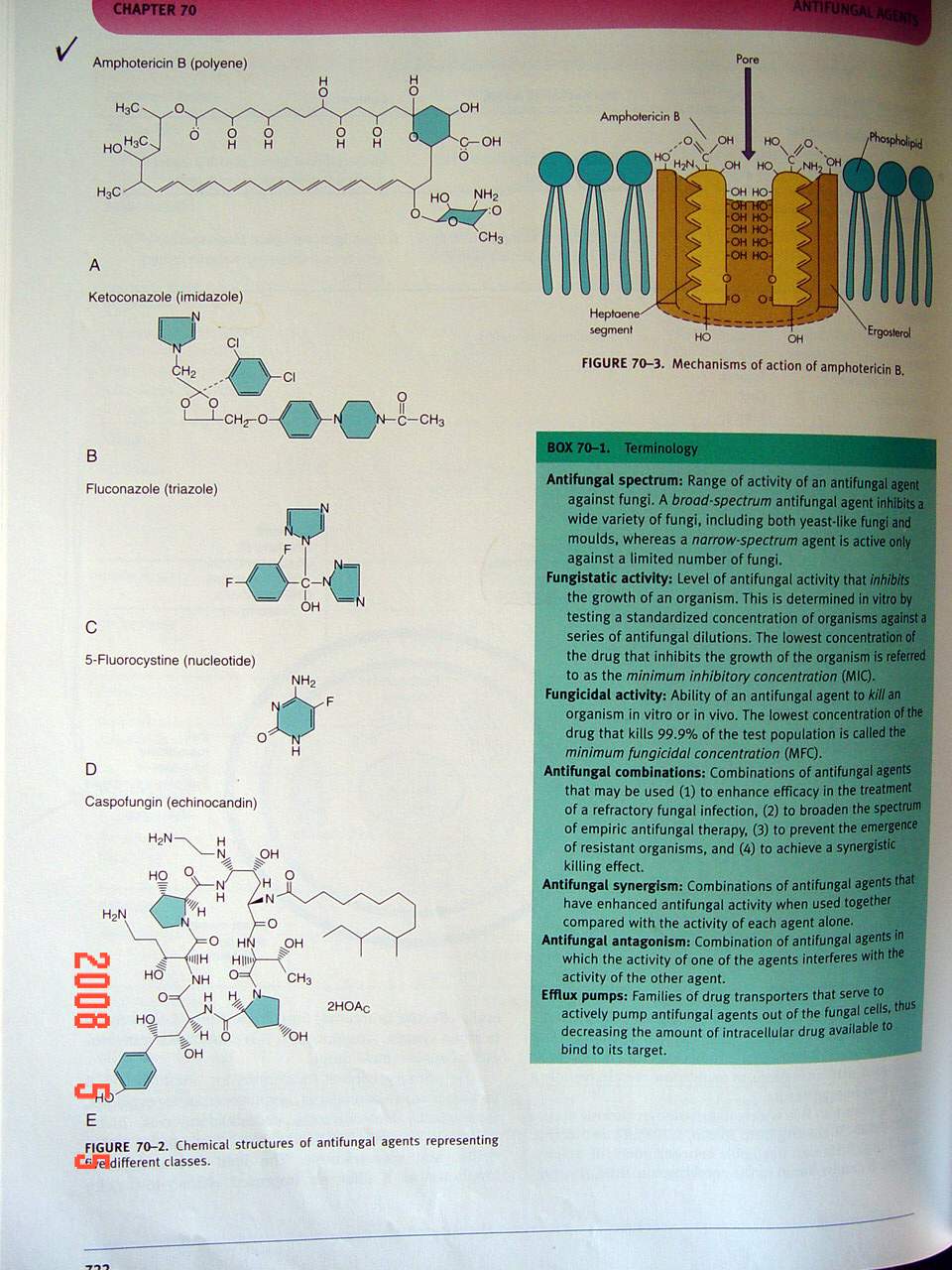
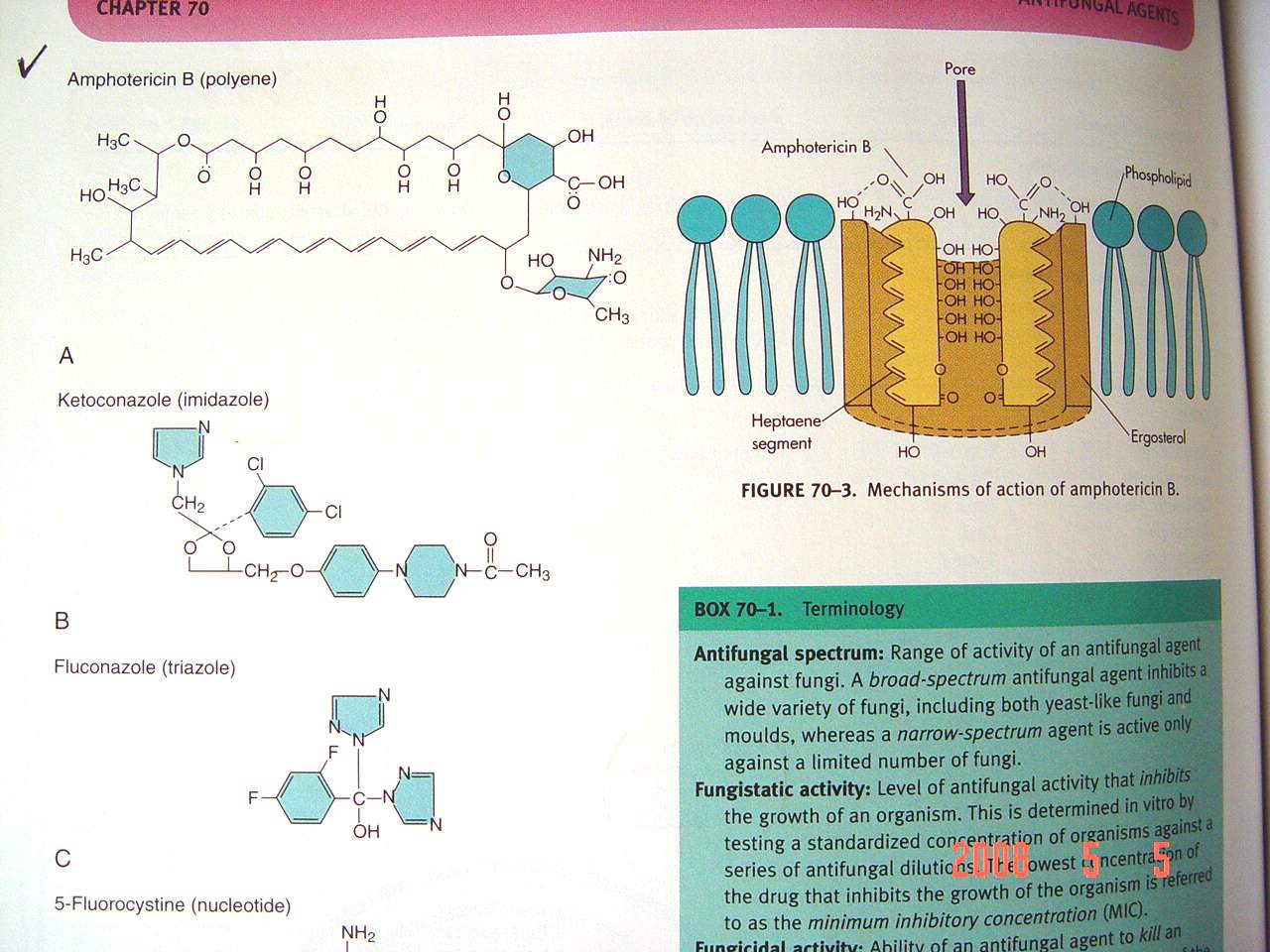
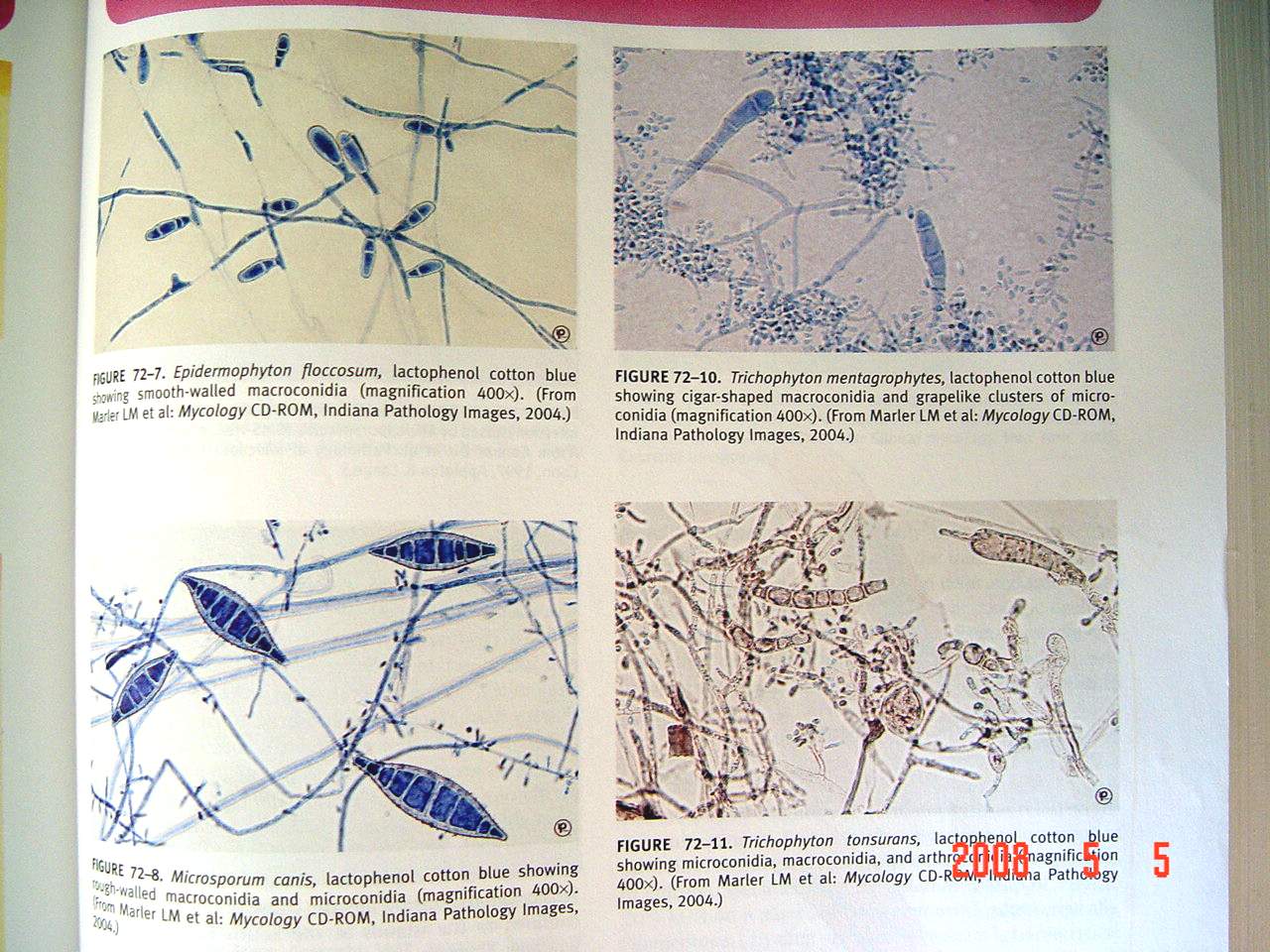
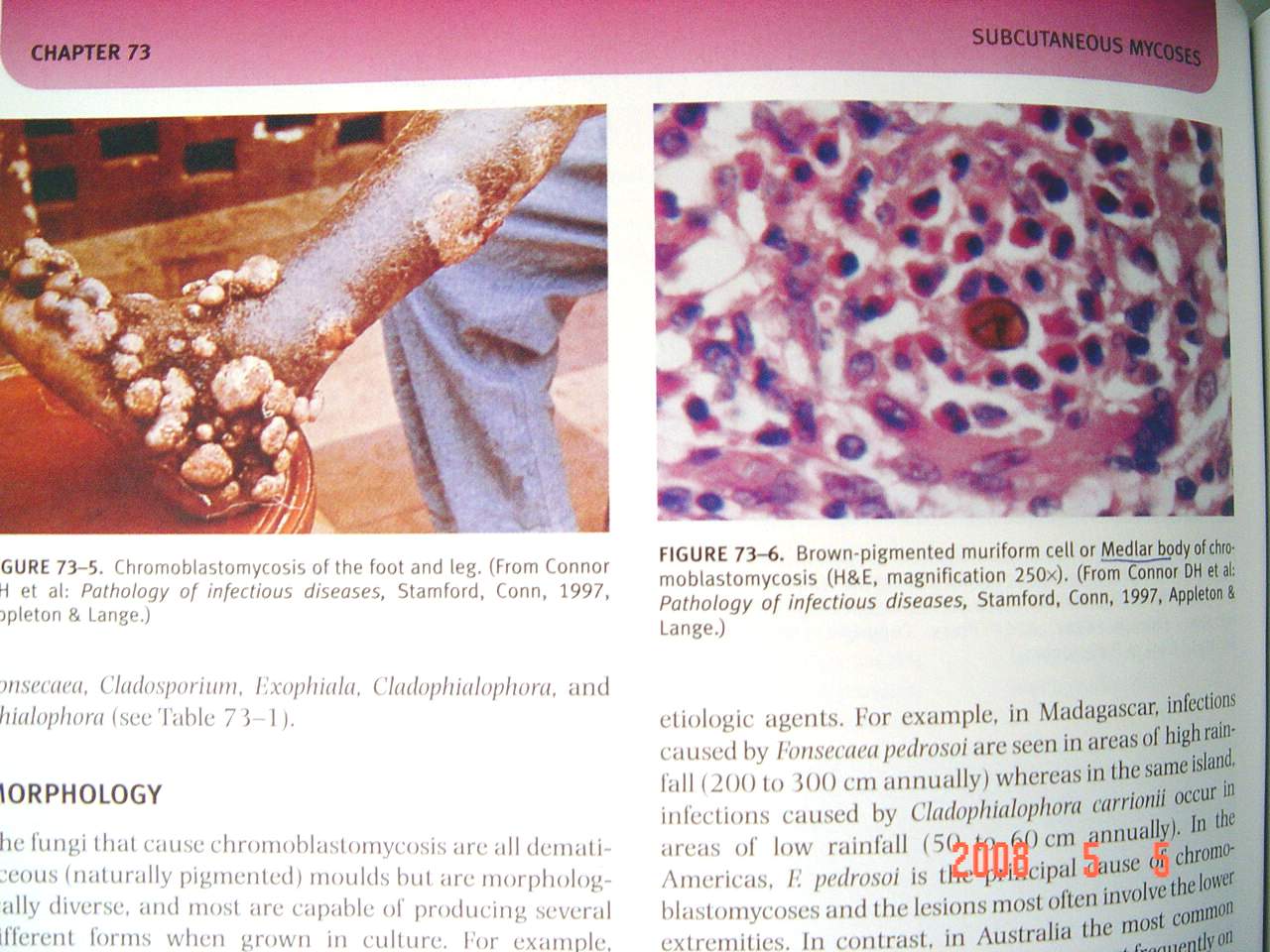
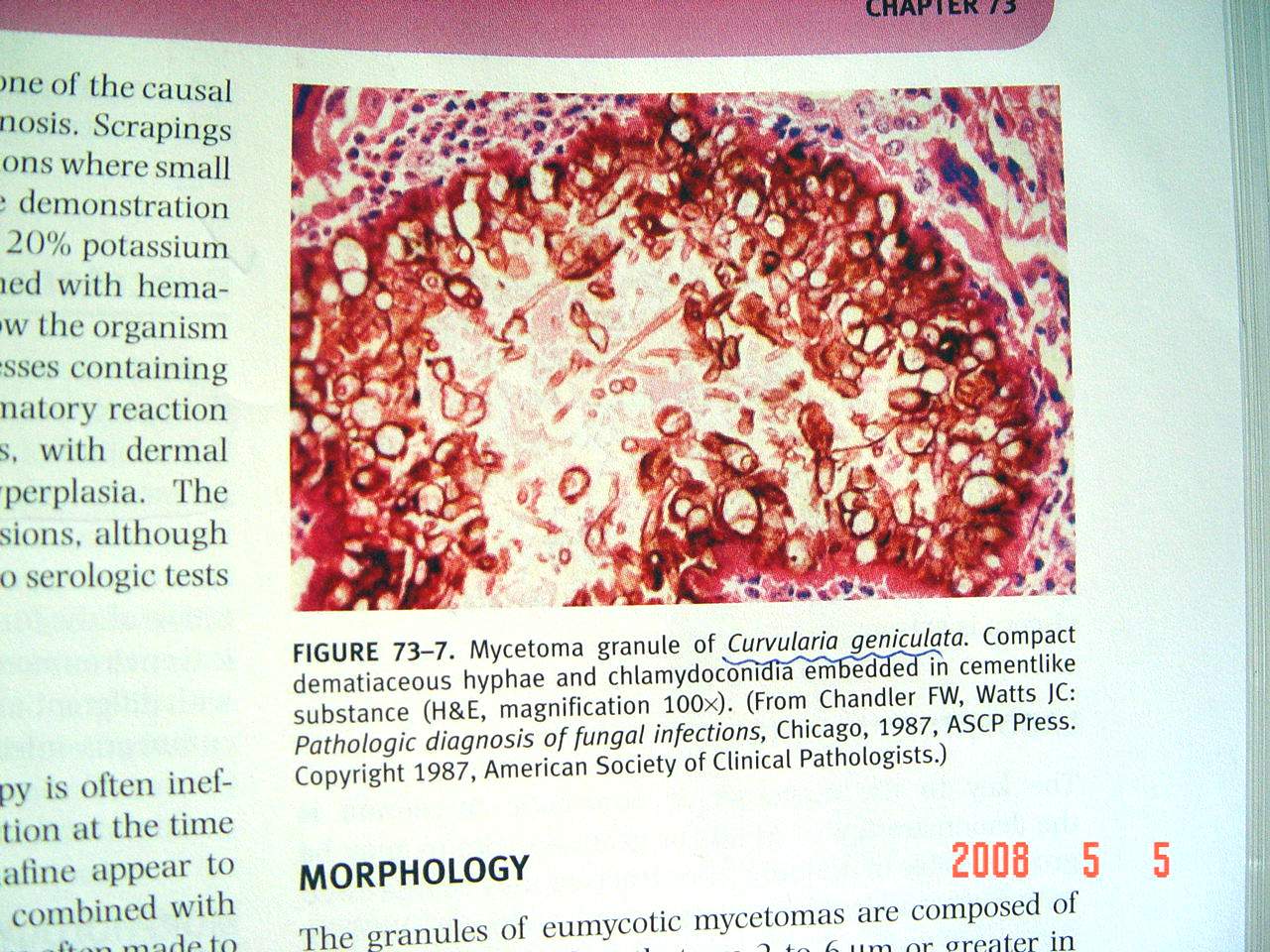
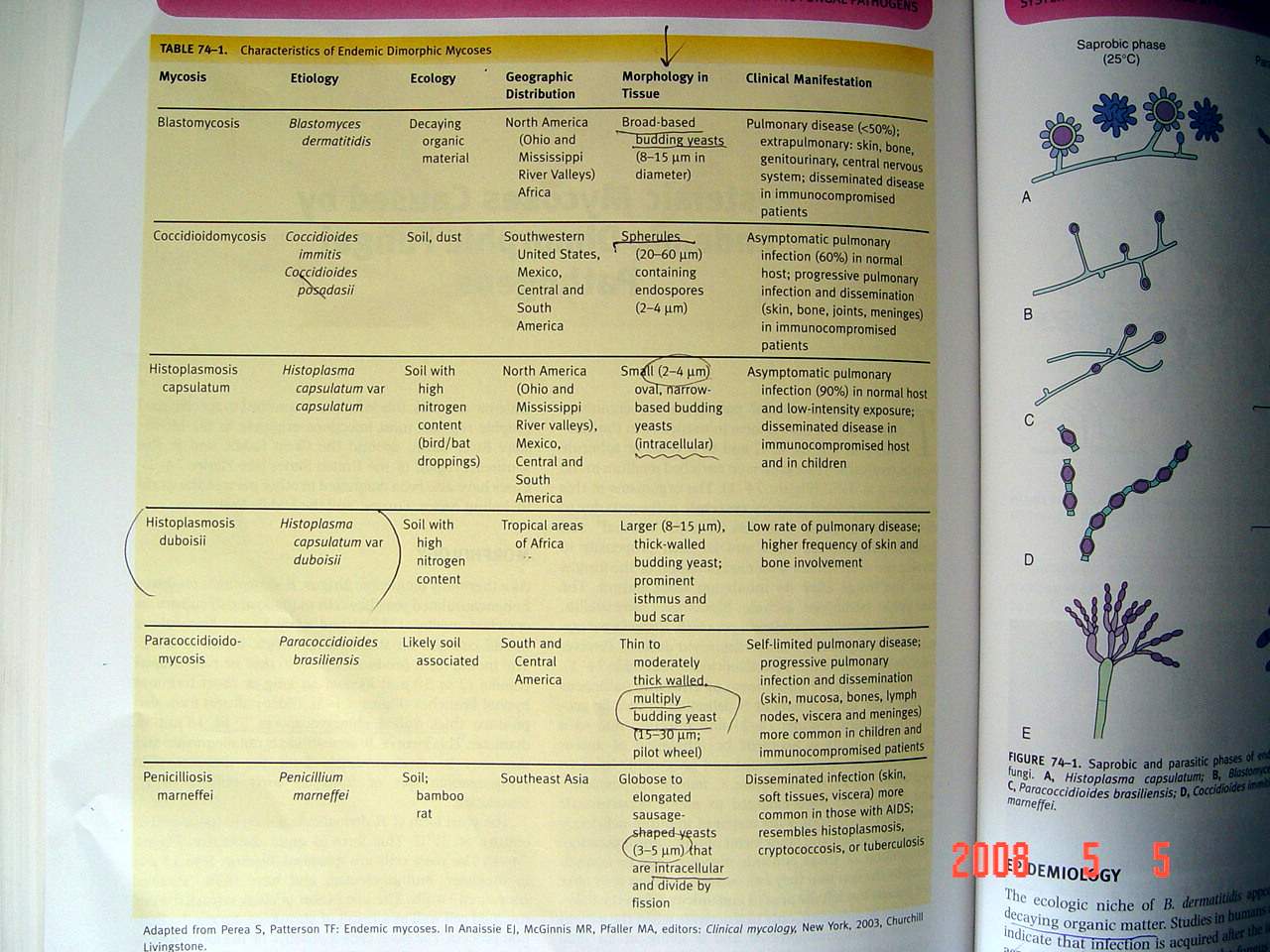
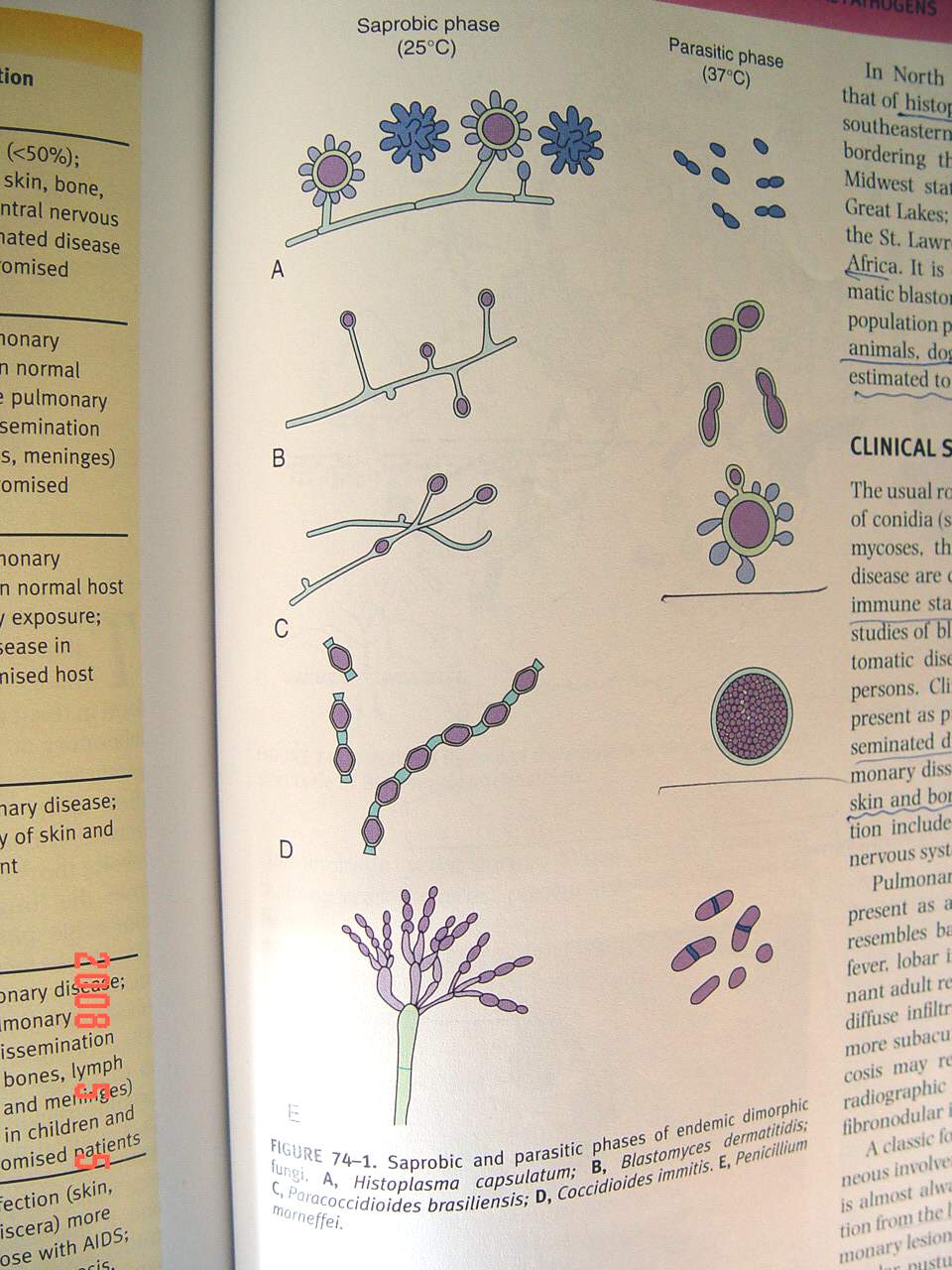
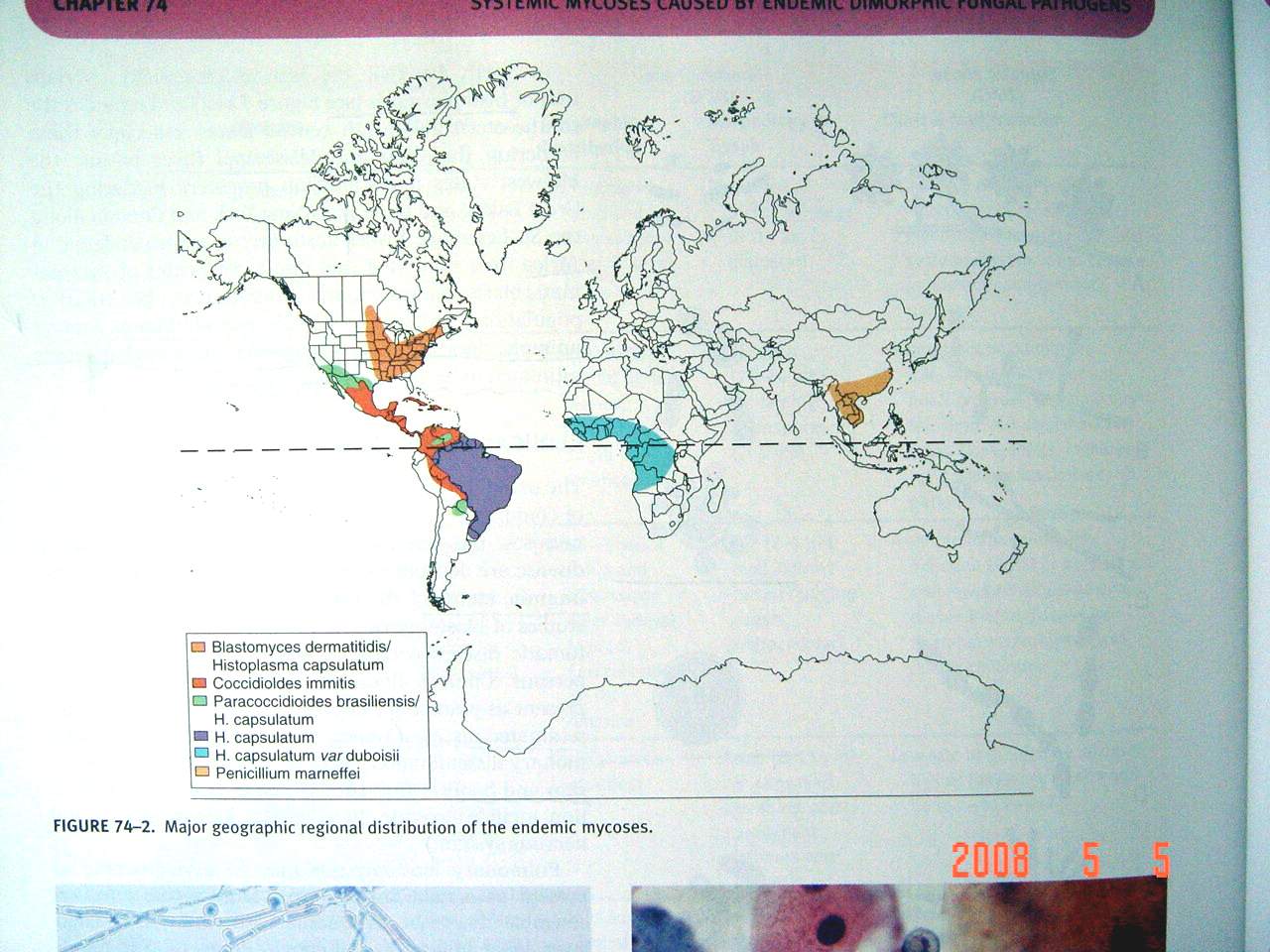
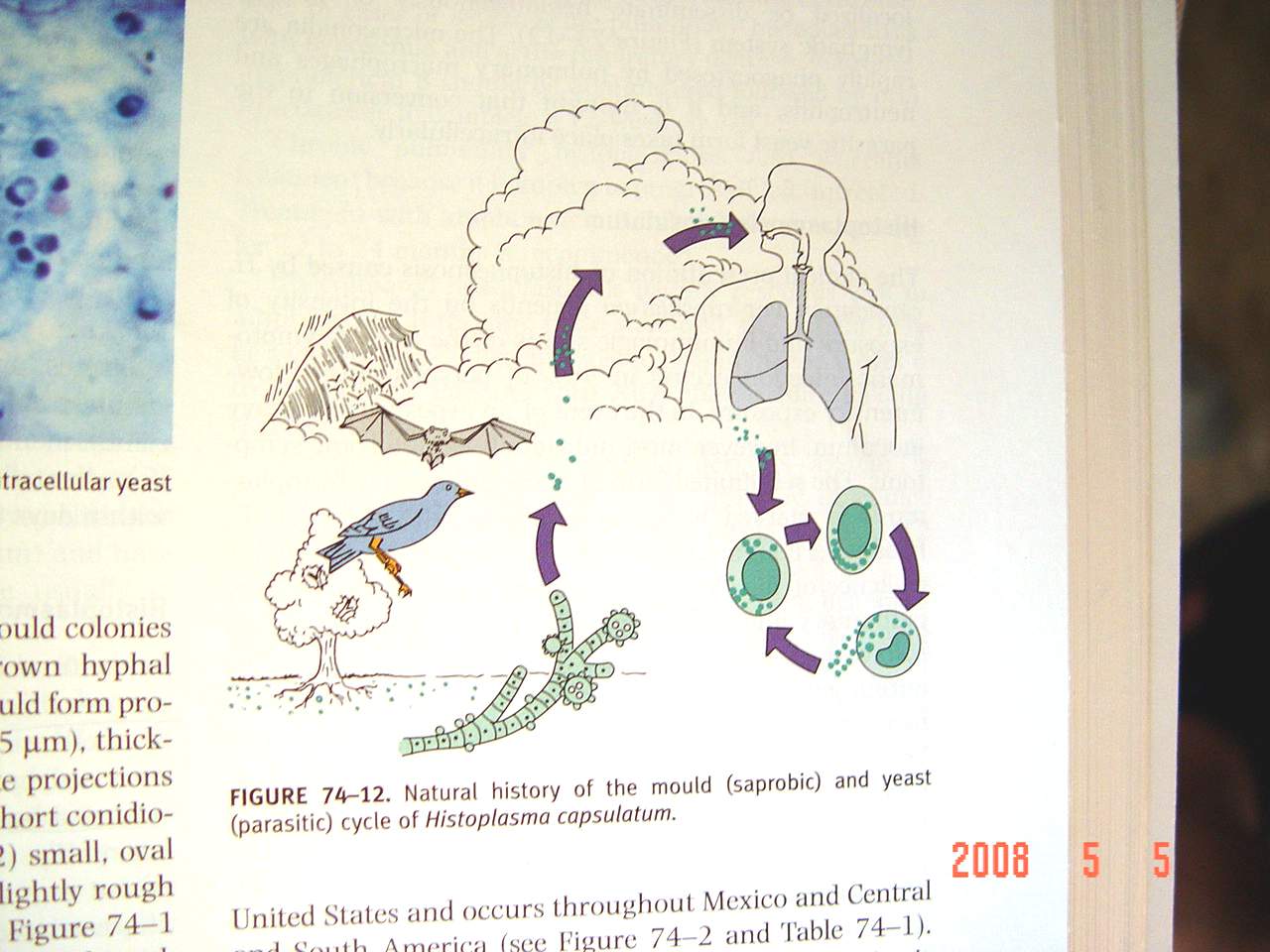
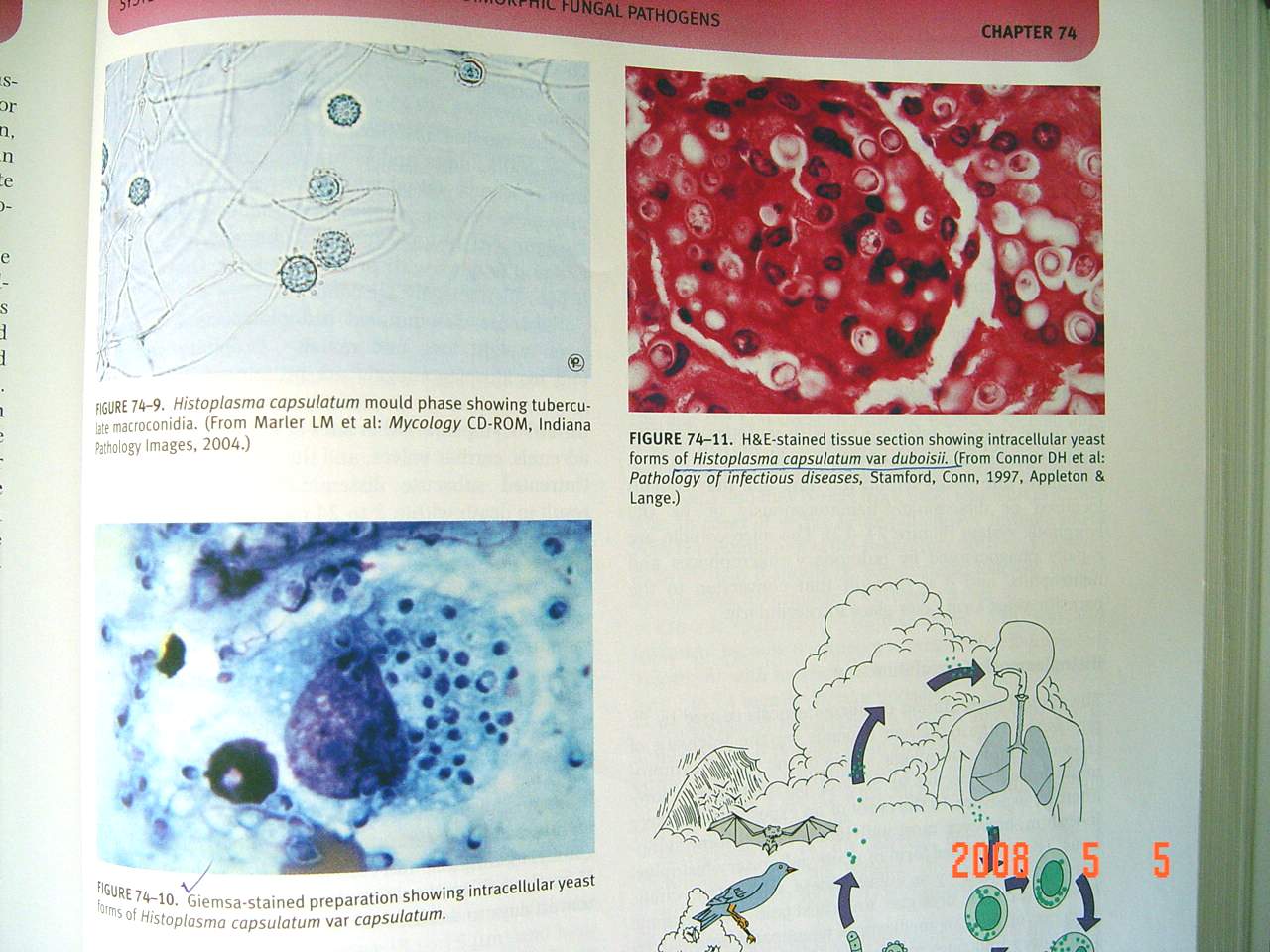
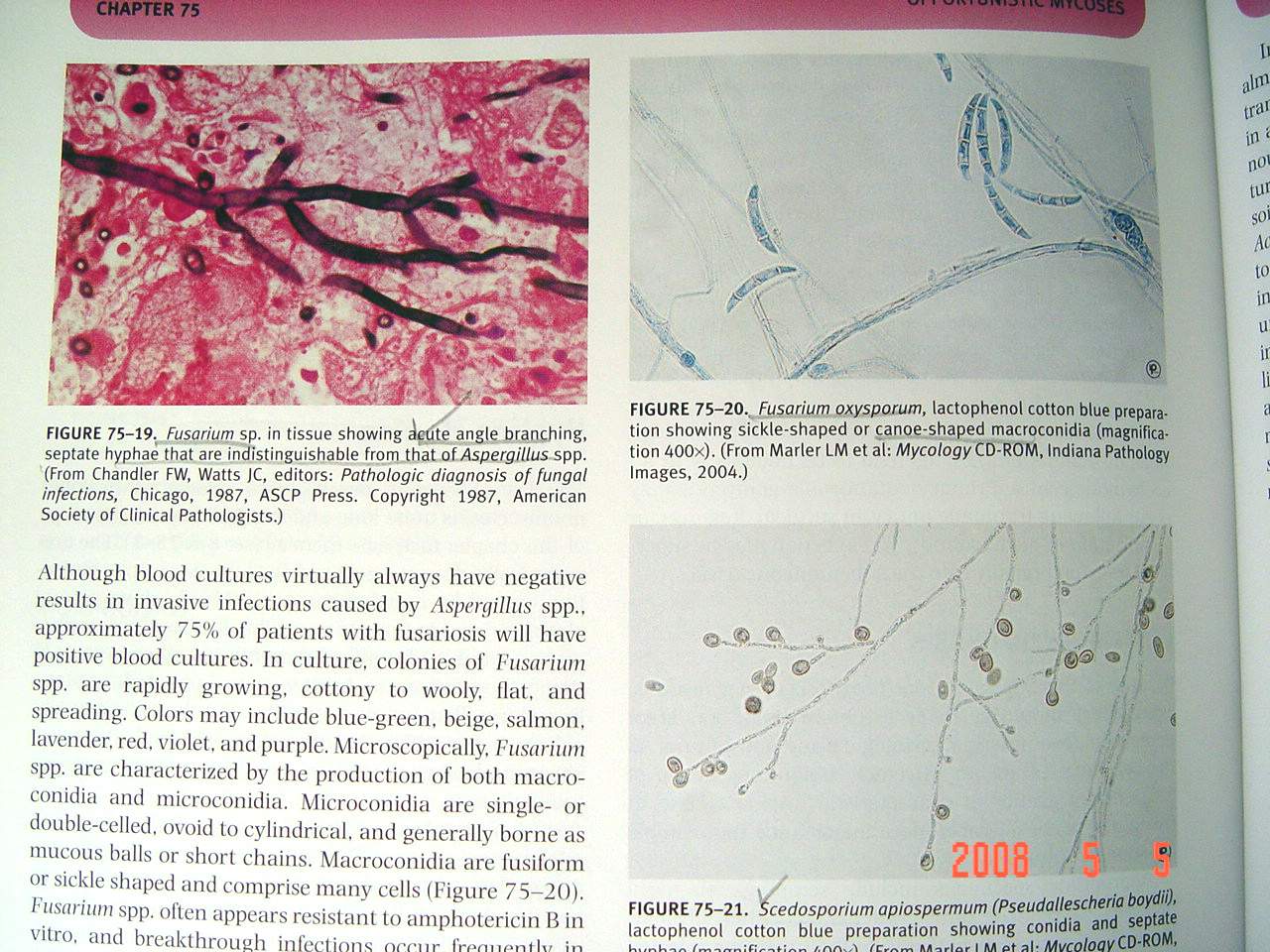
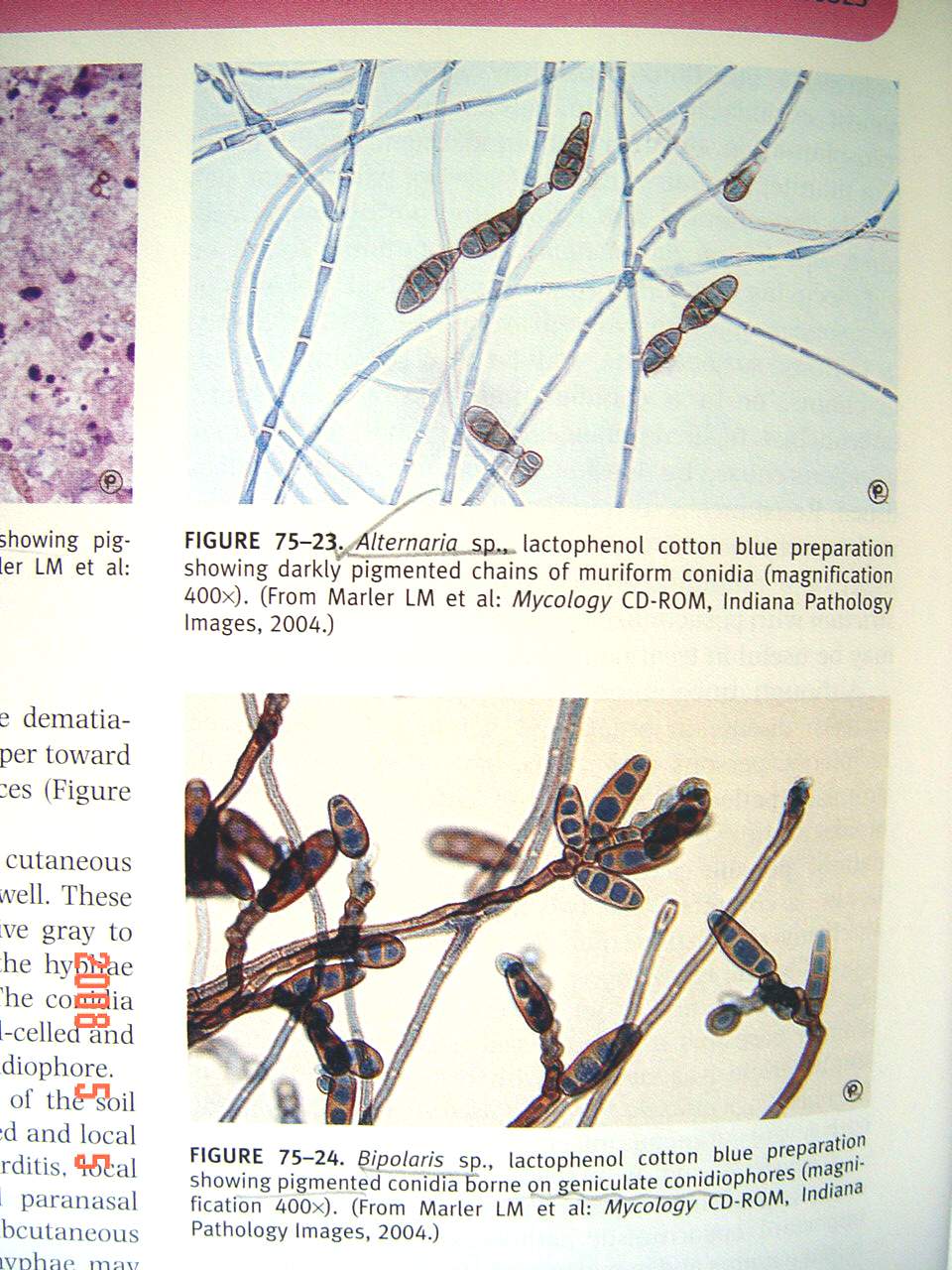
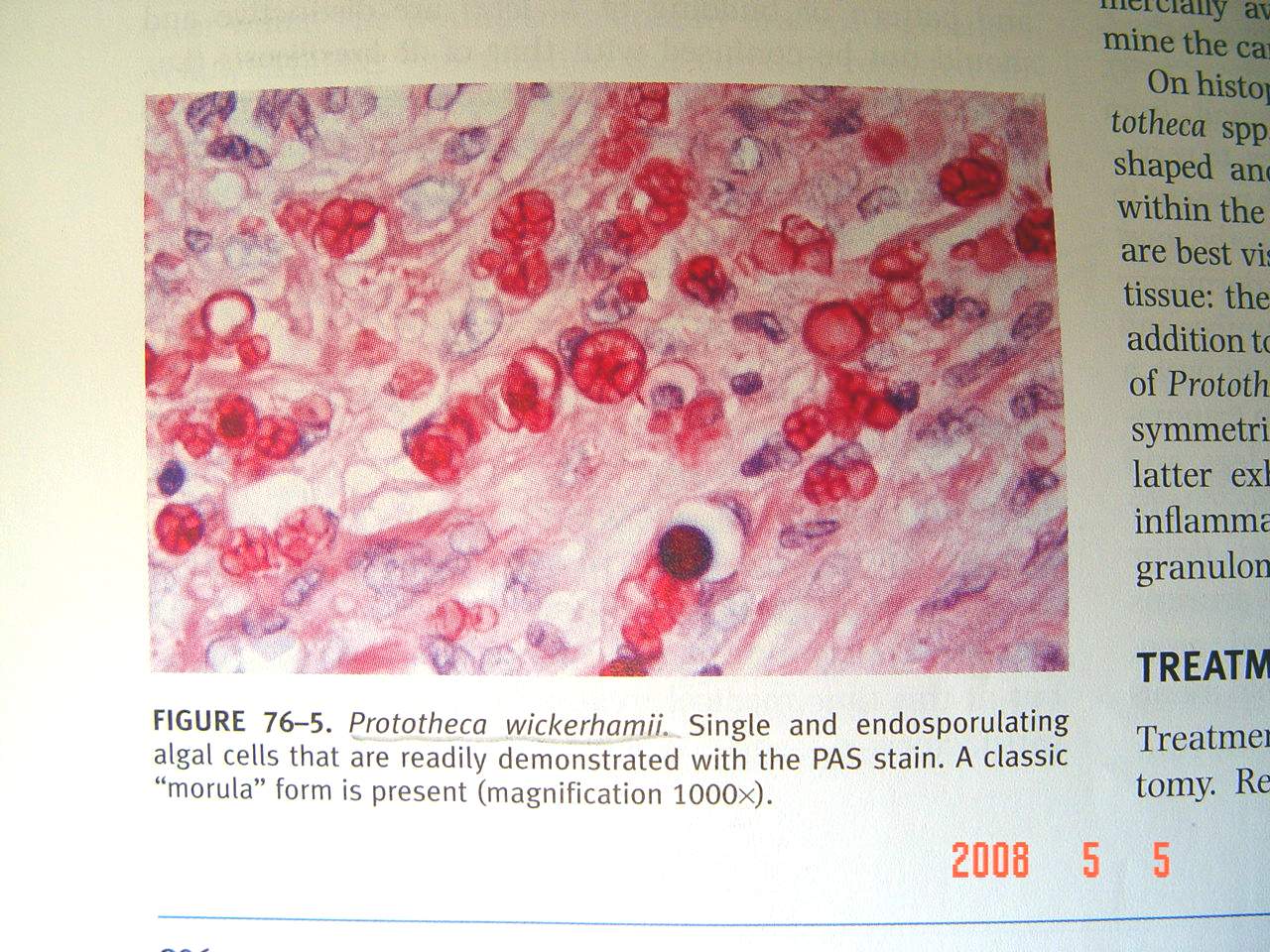
Tab70-1(p720), Fig70-2(p722), Fig 70-3(p722), Fig70-4(p724), Fig72-1,2,3(p746), Tab72-2(p750). Tab72-3(p750), Fig72-7,8,11,12(p751), Fig72-9(p751), Fig73-1,2,3,4(p757), Fig73-5,6(p758), Fig73-7(p759), Tab74-1(p766), Fig74-1(p767), Fig74-2(p768), Fig74-5,6(p769), Fig74-7,8(p771), Fig74-12(p773), Fig74-9,10,11(p773), Fig74-13,14(p776), Fig75-2(p782), Fig75-5,6(p786), Fig75-7,8(p787), Fig75-9,10(p788), Fig75-12,13(p791), Fig75-14,15,16(p792), Fig75-17,18(p794), Fig75-19,20,21(p796), Fig75-23,24(p798), Fig76-5(p806), Fig77-1(p812).

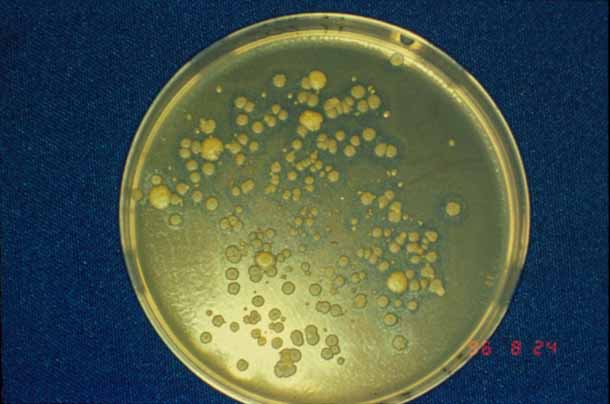
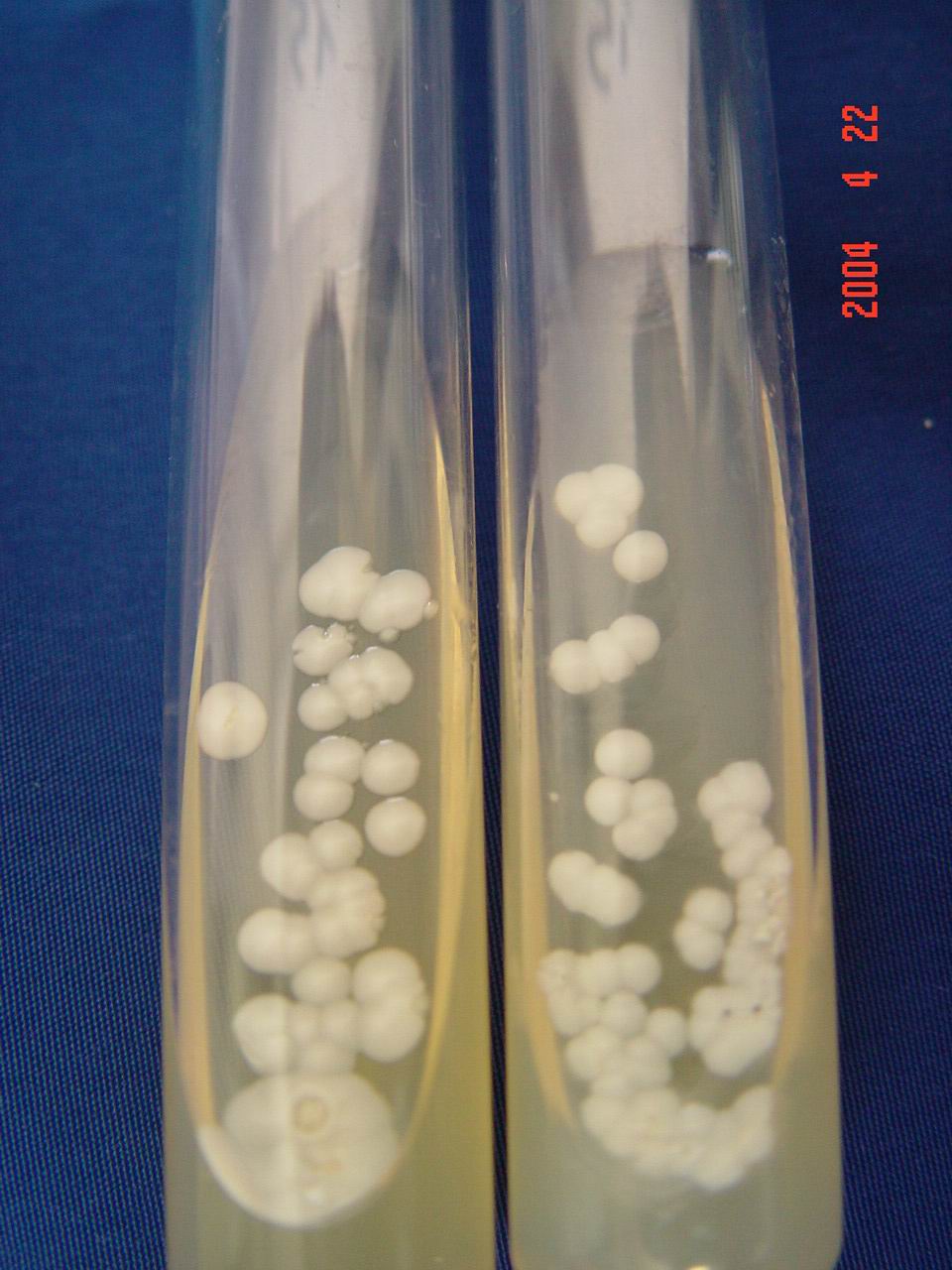
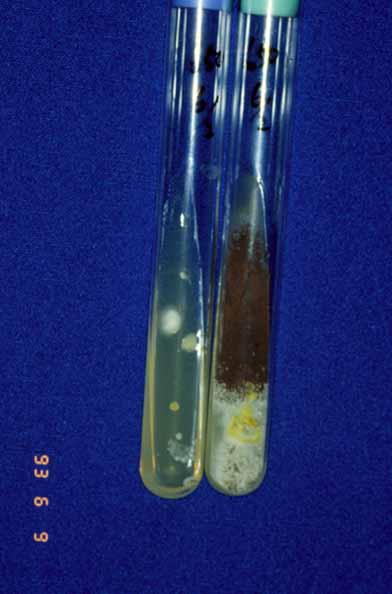
Yeast-like colony. A soft and pasty, white, cream or pinkish colony. Usually no filamentous (fuzzy) growth can be observed macroscopically.